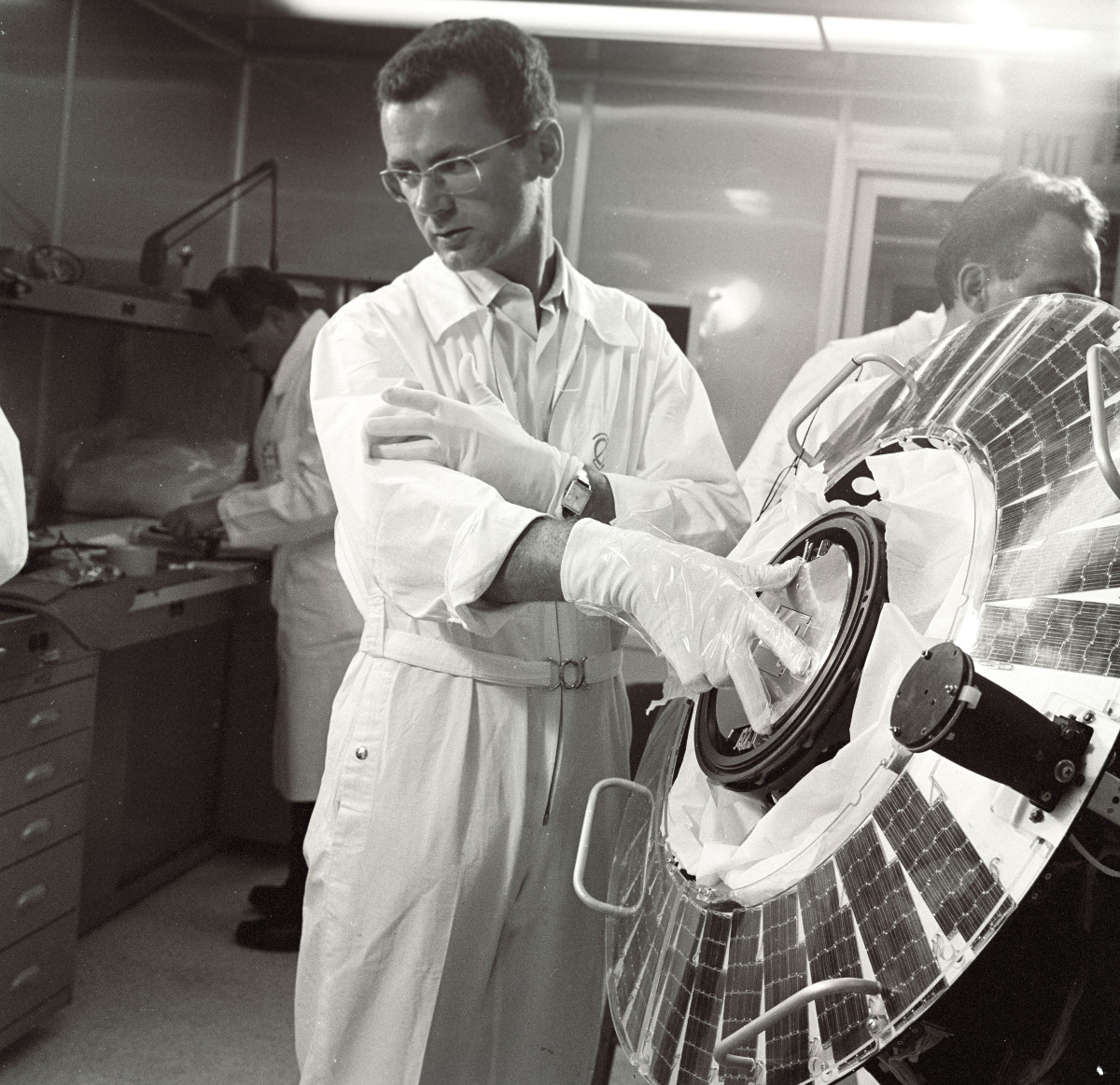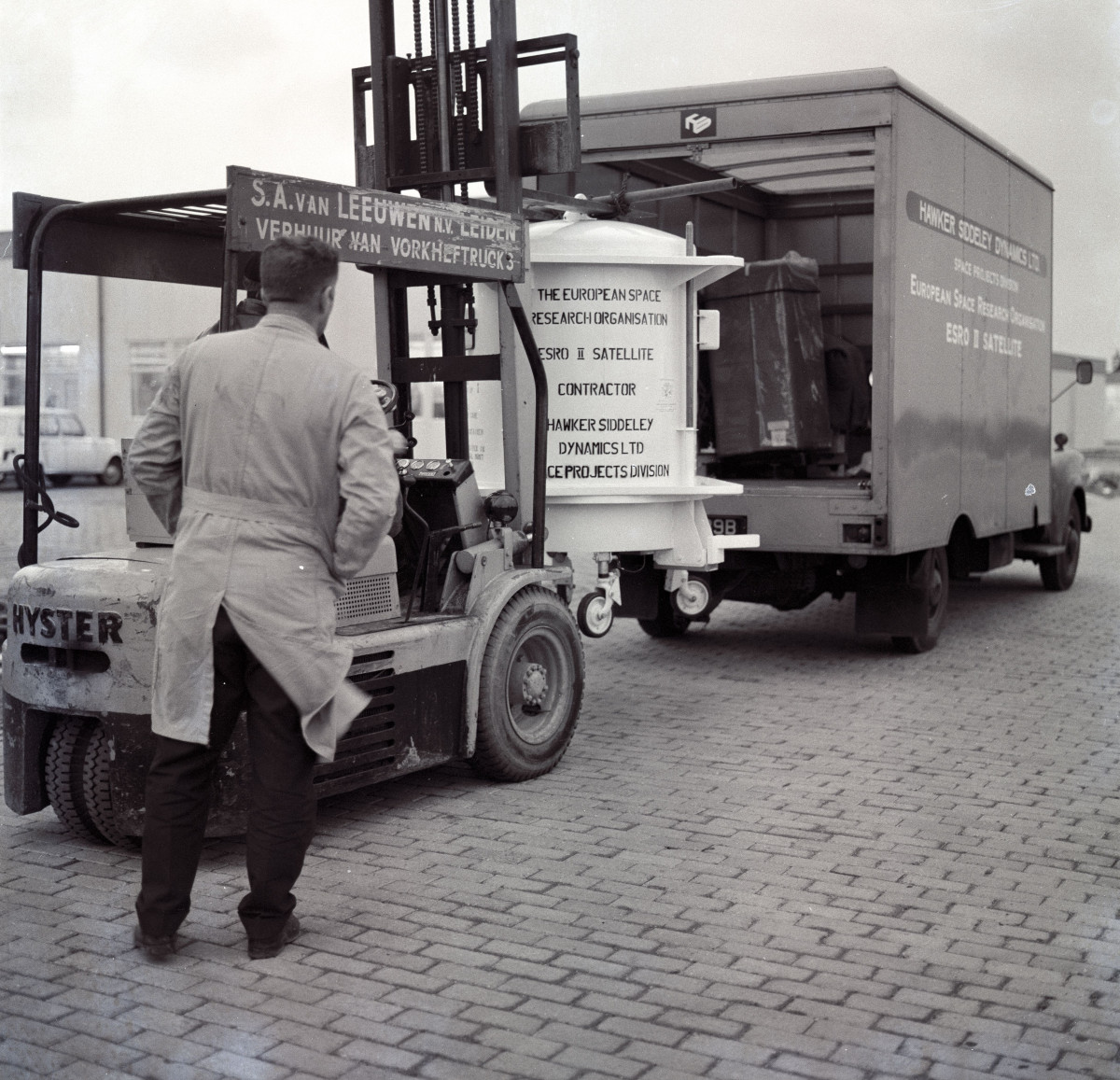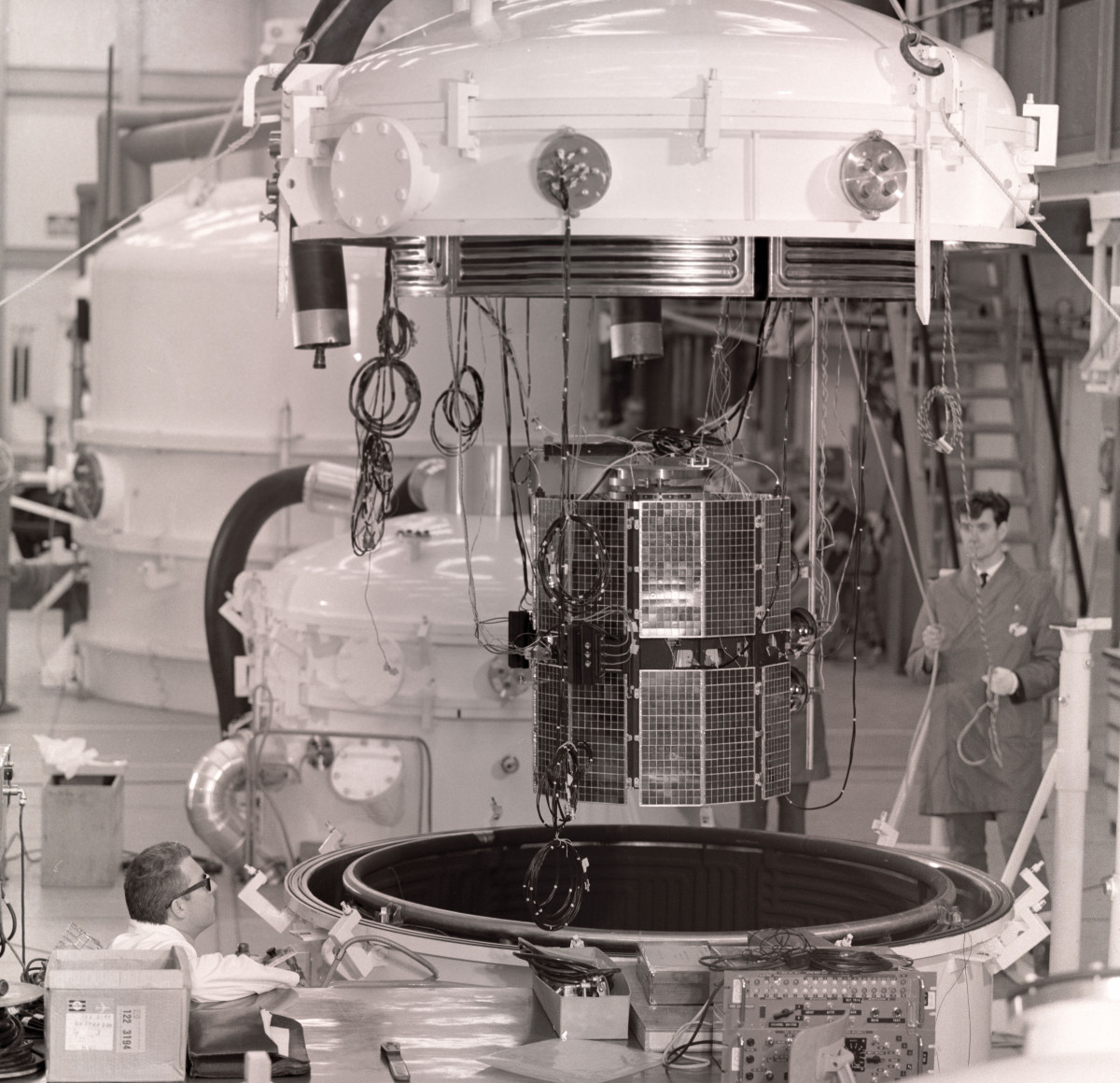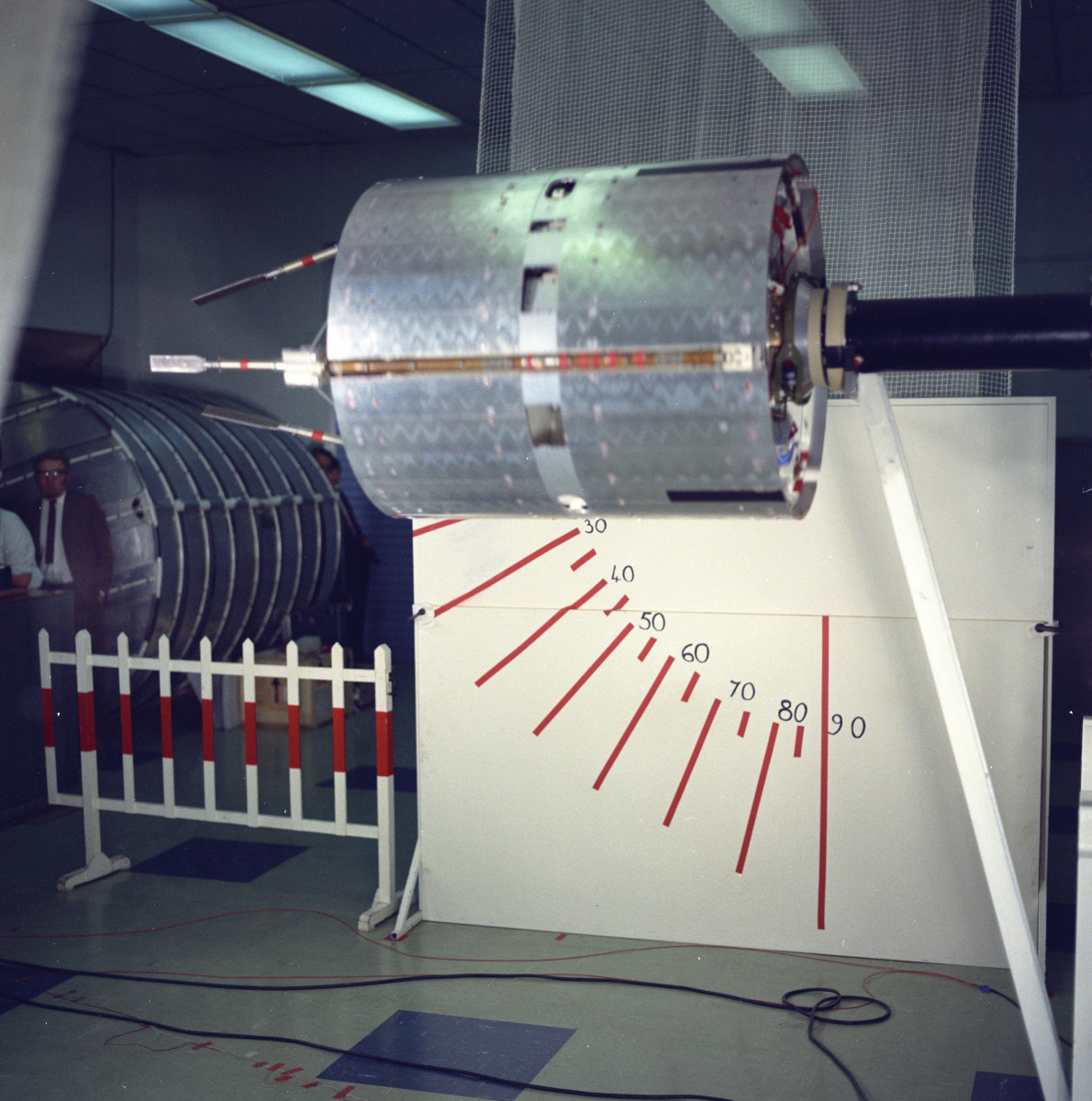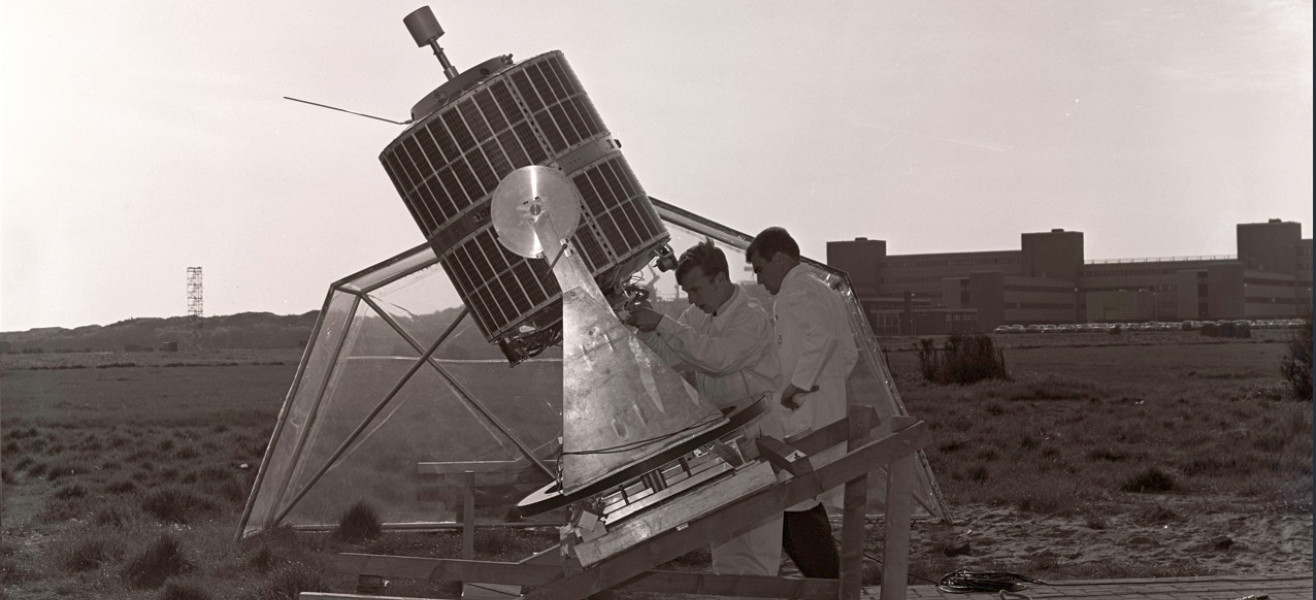
In a partner to May’s article on Sounding Rockets, this month we look at the story of the other ESRO scientific programme, and the seven first-generation satellites launched by ESRO from 1968 to 1972. Read on also for links to resources for further reading in the Archives SHIP database and some thoughts on the precedents for satellite naming that are best left in the 1960s!
The Blue Book plan
As we saw earlier, the primogenitor of today’s ESA Science programme was the original plan for the European Space Research Organisation (ESRO), published in 1961 as the ‘Blue Book’. This outlined two programmes, on sounding rockets and satellites, for ESRO’s first eight years. The Satellite Programme was divided according to timeframe into medium-term projects using small satellites in near Earth orbits and small deep space probes; and long-term projects, needing larger and more complex spacecraft such as satellite astronomical observatories and lunar satellites.
The ‘Blue Book’ goes on to list the proposed fields of study for the medium-term projects and the plan to launch two small satellites in ESRO’s fourth year, and three small satellites or deep space probes per year from the fifth year onwards. While the first of these targets was achieved, the timeline below demonstrates that this proposed launch rate was somewhat optimistic!
It also recommends that the first long-term project (for satellite astronomical observatories) start as soon as possible after the creation of ESRO, with the second (on lunar satellites) to follow after two years. No accompanying launching schedule was outlined here, perhaps this section wiser in its recognition that it would have been very much a moving target?
Vision to reality
By early 1964, the interim Launching Programme Sub-Committee had made recommendations that that the first two small ESRO satellites, ESRO-I and ESRO-II, should be for the study of the polar ionosphere and solar astronomy and cosmic rays, that the first Highly Eccentric Orbit Satellite (HEOS-A1, later HEOS-1) should be devoted to cosmic ray studies and that a second HEOS or space probe should be dedicated to studies of the interplanetary medium.
However, once the ESRO Convention entered into force in March 1964, its Launching Programme Advisory Committee embarked on what would essentially become an ongoing process of revision, once the programme hit the realities of scientific competition, technical considerations and financial constraints. This included the introduction of the medium-sized stabilised TD satellites in a revised launching programme proposed in February 1965 that favoured the Thor Delta launcher over the Scout rocket (used by ESRO-I and -II), and the halting of the Large Astronomical Satellite space telescope (LAS) and abandonment of the second major project by 1966. The detailed machinations in ESRO’s committees and delegations are laid out in the ESA History Study Report on ESRO's First Scientific Satellite Programme 1961-1966, by Arturo Russo.
Russo recaps ESRO’s first three-year period, noting that the comparison with the ‘Blue Book’ was “not exciting. Only five small and medium size satellites were under development and could be launched within the 8-year period covered by the Convention, no other project of this kind had been approved yet; the large astronomical satellite was definitely jeopardized and with it any hope to develop large space projects from which ESRO had mainly derived its raison d'être”.
The following History Study Report (Choosing ESRO's First Scientific Satellites) picks up the story for the period running up to 1969 and looks at the processes, discussions and meetings behind the choice of the scientific payloads for the first generation of satellites listed below. Along the way, Russo explains the TD ‘crisis’ of 1968 which led to the cancellation of the approved TD-2 satellite, which was eventually replaced by the ESRO-IV satellite.
The end of the 1960s also marks the conclusion of the first phase of ESRO’s life and the point where it is possible to see, in Russo’s words, the “actual outcome of the ambitious programme which the ESRO pioneers had written for COPERS in 1961” - a first generation of satellites that were in either in orbit (ESRO-I and -II, HEOS-1) or under development and scheduled for launch in 1972 (HEOS-2, TD-1 and ESRO IV). While these results, and ESRO’s recognition that it could not cover all (or even most) research fields might, on paper, look like a defeat, Russo’s analysis is that that they mark an incoming period of new maturity for ESRO, and a more secure basis for the scientific programme:
“With the approval of two new satellite projects (COS-B and GEOS) and the policy definition of early 1970 a new phase was opened: it was definitely recognized that ESRO could not support all fields of space science in a viable way but it had to select a few, well-phased major projects according to agreed scientific guidelines.”
This next chapter is covered in detail in HSR-06, ESRO's satellite programme in 1969-1973, which investigates the definition and direction of the satellite programme from 1969, but that is a story for another time!
Timeline – satellites launched by ESRO
Nevertheless, ESRO succeeded in placing seven satellites in orbit during its years of operation, balanced against just one failure, perhaps representing the well-deserved outcome of the perseverance of those involved during these tumultuous years!
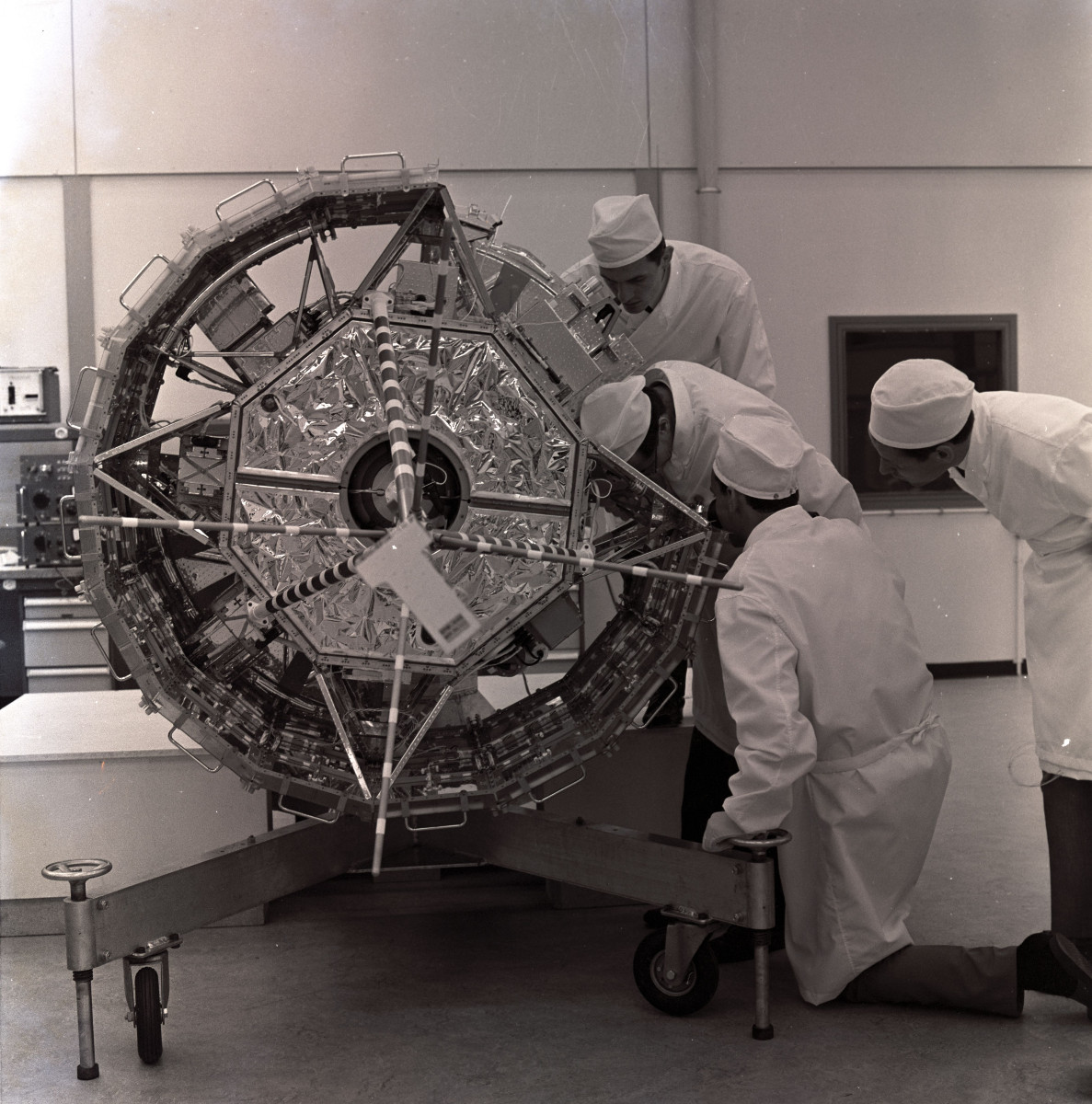
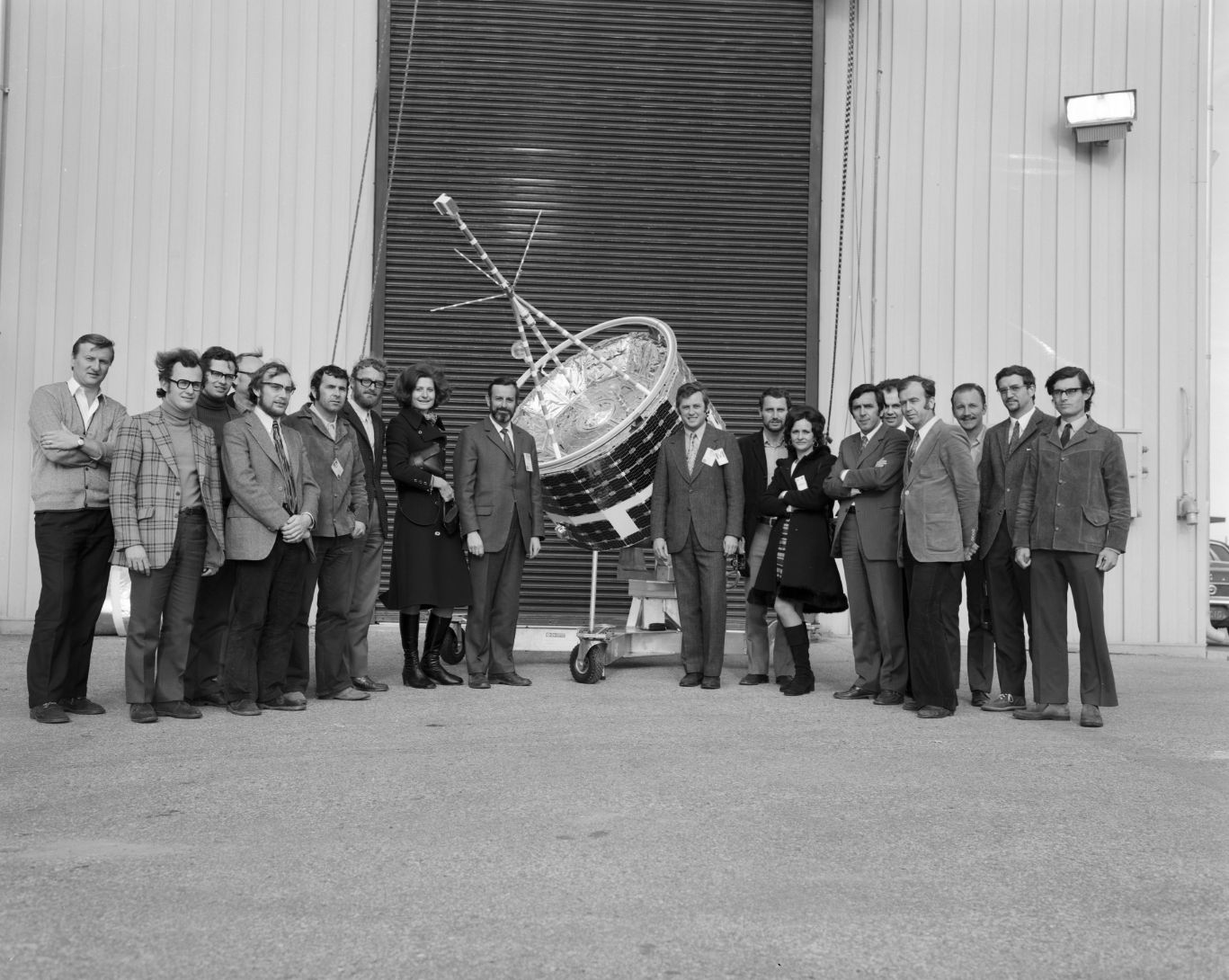
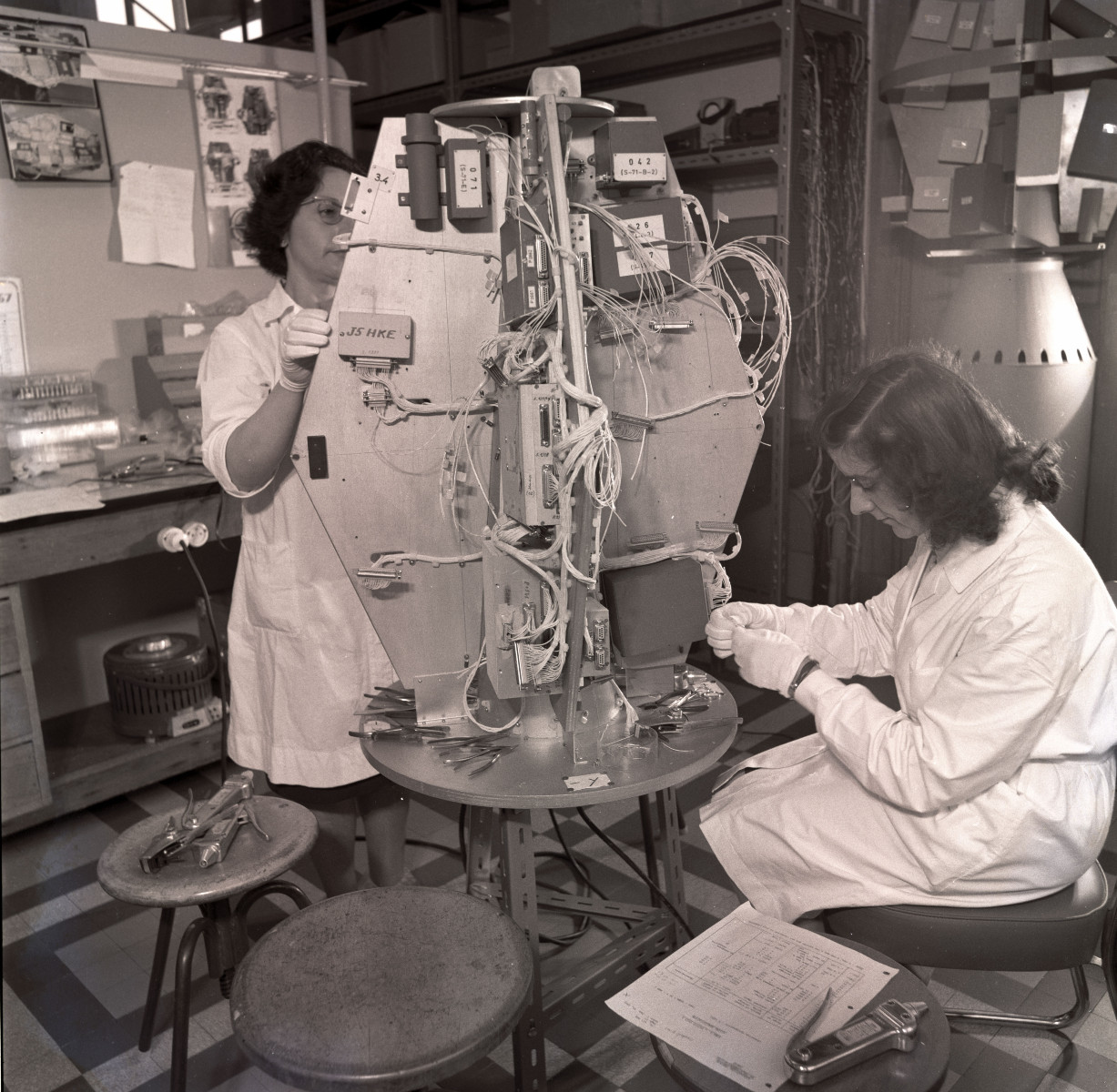
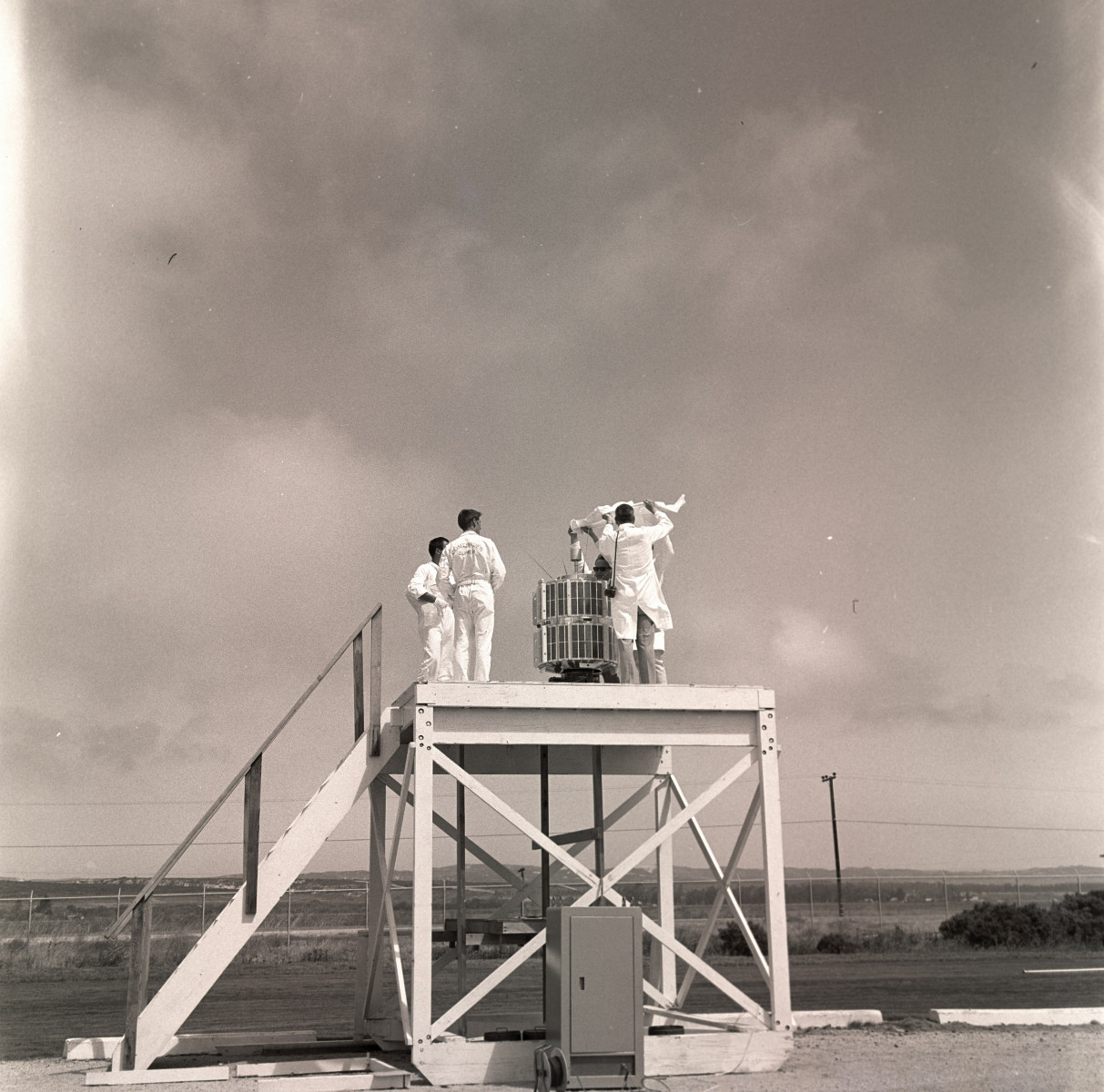
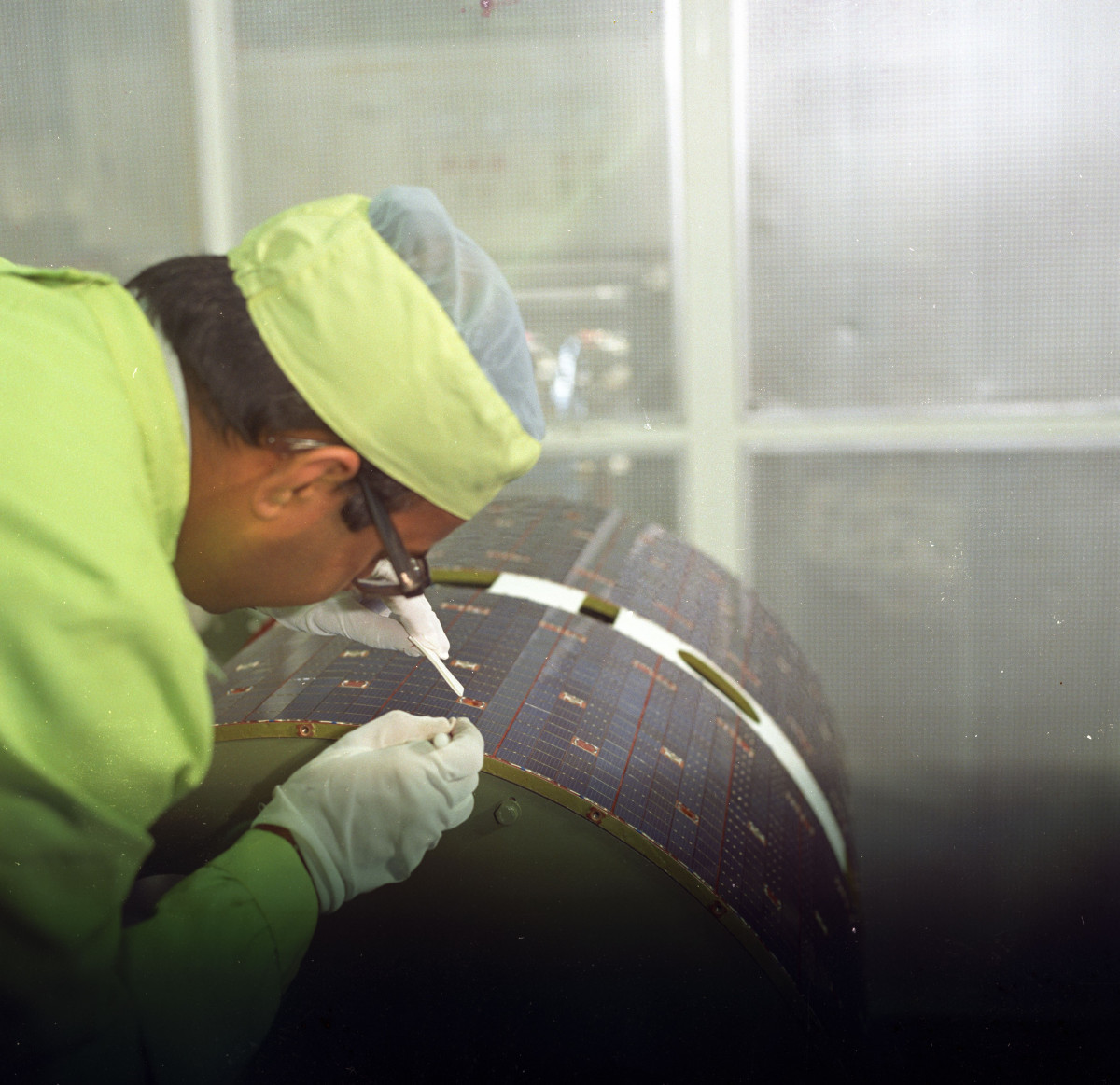
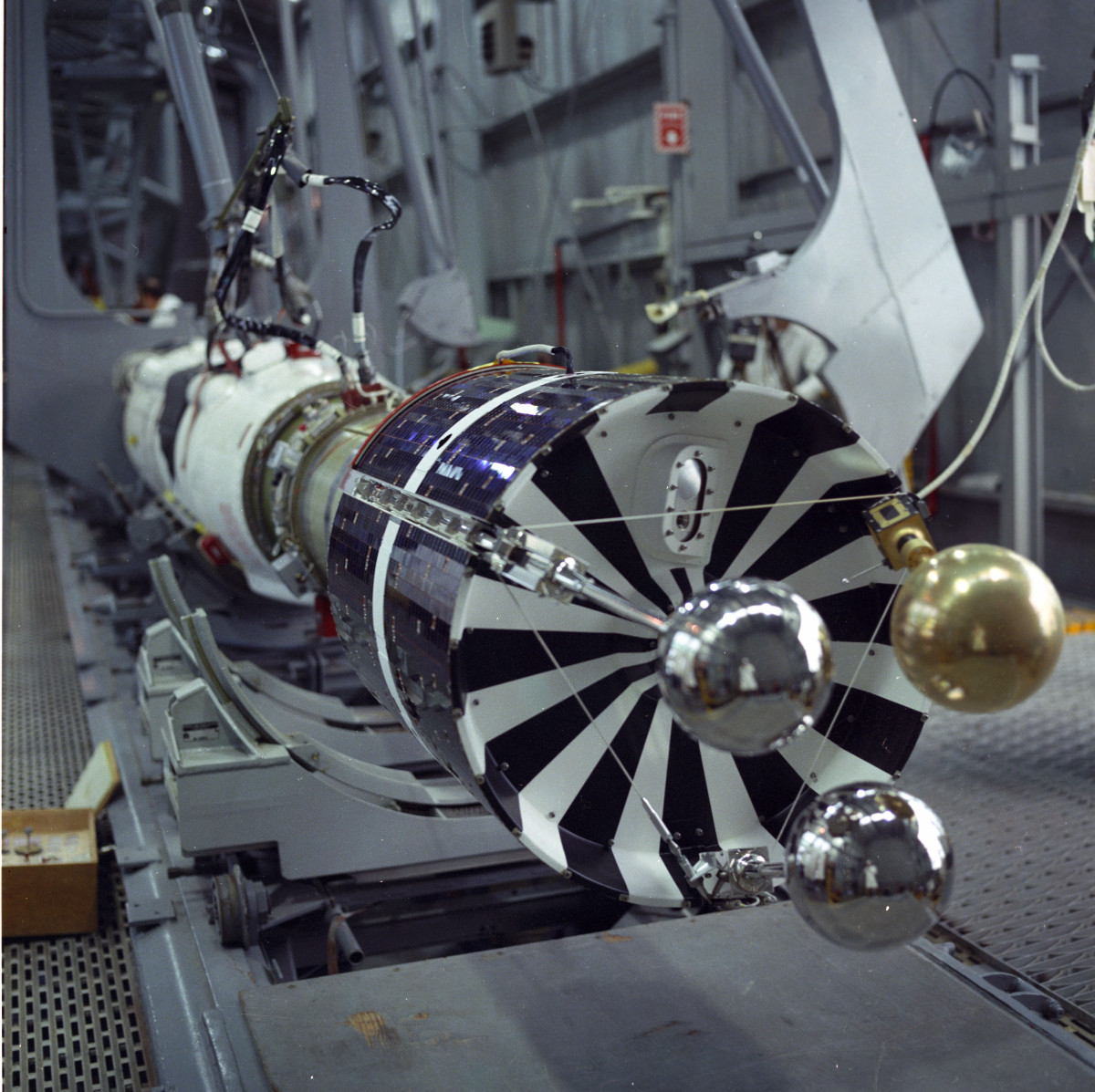
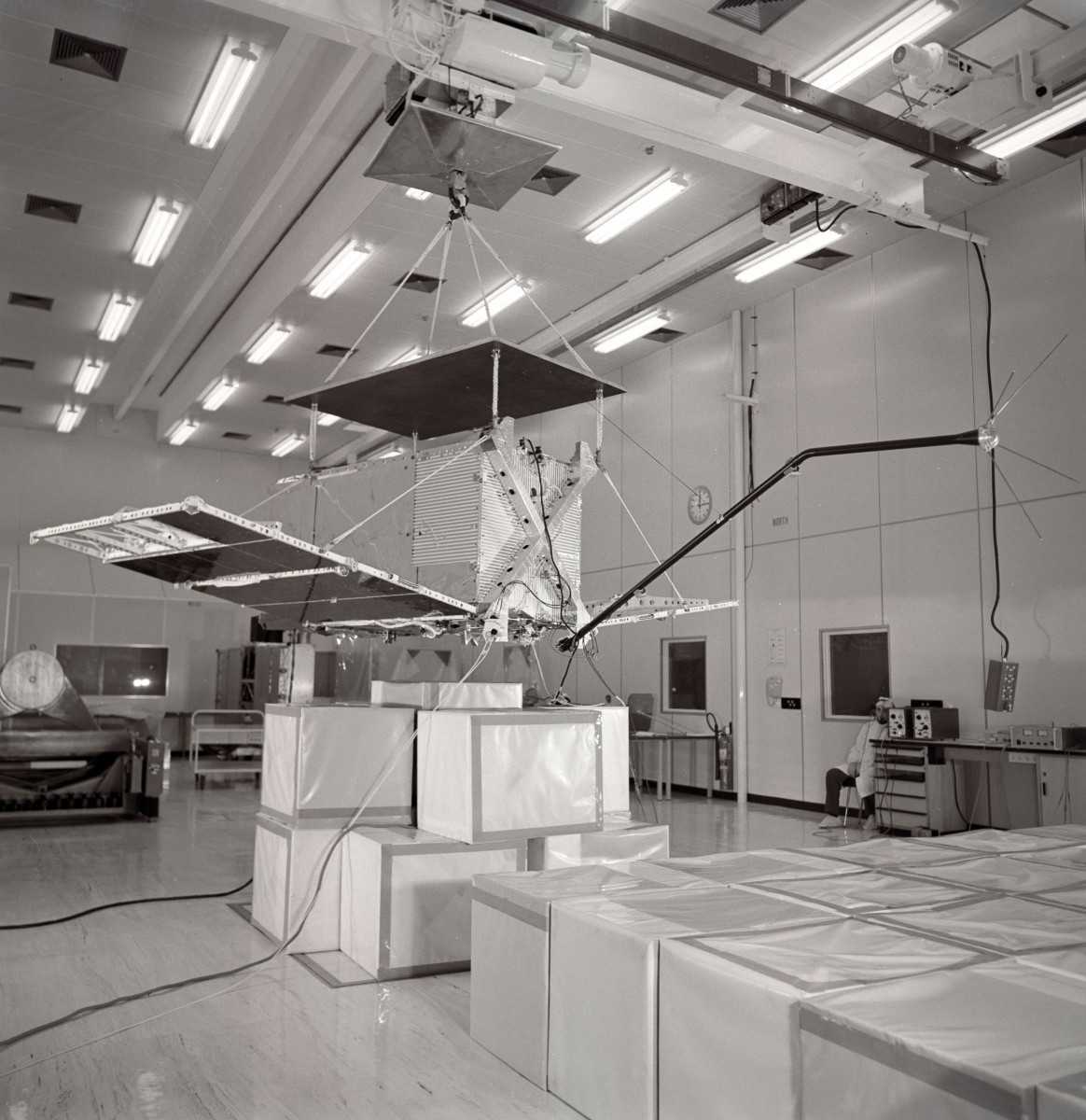
This first generation of European satellites was made up of the small unstabilised satellites ESRO I and II, designed for launch by Scout rockets into low orbits, the small highly eccentric orbit satellites, HEOS-1 and HEOS-2, designed for launch by Thor Delta rocket, the medium size, stabilised satellite TD-1 (designed for launch by Thor Delta rocket into near earth orbits) and the small satellite ESRO IV, which replaced the second satellite of the TD series (TD-2). All were multi-experiment satellites, carrying payloads with instruments from different research groups in line with the relevant scientific mission:
- ESRO-IIA (first flight unit)
mission: solar astronomy and cosmic rays, seven experiments
launched 29 May 1967, lost due to launch vehicle malfunction
- ESRO-IIB (Iris, second flight unit)
mission: solar astronomy and cosmic rays, seven experiments
launched 17 May 1968 - ESRO-IA (Aurorae)
mission: polar ionosphere and auroral phenomena, eight experiments
launched 3 October 1968 - HEOS-A1, later HEOS-1
mission: solar wind and solar particles, seven experiments
launched 5 December 1968 - ESRO-IB, (Boreas)
mission: polar ionosphere and auroral phenomena, eight experiments
launched 1 October 1969 - HEOS-A2, later HEOS-2
mission: interplanetary medium and exploration of high-latitude magnetosphere and its boundaries, seven experiments
launched 31 January 1972 - TD-1
mission: astronomical, solar and cosmic ray research, seven experiments
launched 12 March 1972 - ESRO-IV
mission: ionosphere and solar particles, five experiments
launched 26 November 1972
Full lists of the agreed payloads and final configurations of payloads are included the annexed tables in Choosing ESRO's First Scientific Satellites.
A naming curiosity
Was it just lack of inspiration or did it come about incrementally that the first two ESRO satellites became known as ESRO-I and ESRO-II (for example, from ESRO satellites I and II to ESRO-I and ESRO-II)? The archival sources give us no concrete answers. We are nonetheless very glad that the convention of naming satellites after the organisation went no further than ESRO-IV. Primarily, since it complicates archival research (even into this very question!) with the need to filter and extract sources that deal with the relevant satellite from a vast range of other institutional material. While three of these were renamed after launch, as Aurorae, Boreas and Iris, this unfortunately helps little with any research into their development phase. And the frequent changes between use of letters or numbers for the ESRO and HEOS satellites only adds even further confusion! (We have attempted to list all the variations above.)
Resources and more reading
Since a more thorough survey is out of the scope of this article, the following list points towards resources related to the ESRO satellite programme that are available on the ESA website, this website or in the digital collections open in the Archives SHIP database. Further material will be added shortly, too!
ESA Archives portal
ELDO’s technical legacy and the origins of the ESA Journal - the recently-opened collection of ELDO and ESRO Scientific and Technical Review contains an entire range of papers from 1969 to 1972 that deal with the early ESRO satellites.
ESRO General Reports – includes reports from 1964 to 1974 that cover the period from the 1967 launch (and loss) of the first ESRO satellite, ESRO-IIA, to the 1972 launch of the final three ESRO satellites (HEOS-A2, TD-1A and ESRO-IV).
George van Reeth and the development of ESA contract regulations – talks about Van Reeth’s introduction of new forms of contracts for the first ESRO Satellite Programmes (ESRO I and II, HEOS-1 and 2, TD-1 and 2). These adapted the incentive contracts and project control methods practised in the US, incorporating incentive clauses and combining price, technical performance and schedule terms, for the European environment.
Hermann Bondi: scientist, manager and space legacy - ESRO’s second Director General talks about management of the ESRO Satellite Programme, LAS and the TD crisis in a newly published interview.
ESRO and ELDO communications: 1964-1975 – this collection includes information on ESRO’s application satellites programme, publications on the ESRO-1B satellite and press kits and programmes for the launches of the ESRO-1B and ESRO-4 satellites.
SHIP database
The Blue Book: Report of the Scientific and Technical Working Group to COPERS - English
Rapport du Groupe de Travail Scientifique et Technique - French
Satellite images/publications: photographs of the satellites and ESA publications dealing with them are also searchable in SHIP. Use the search terms ESRO-1, ESRO-2, ESRO-4, HEOS-1, HEOS-2, TD-1.
ESA website
HSR-02: HSR-2: ESRO's First Scientific Satellite Programme 1961-1966
HSR-03: Choosing ESRO's First Scientific Satellites
HSR-06: ESRO's satellite programme in 1969-1973