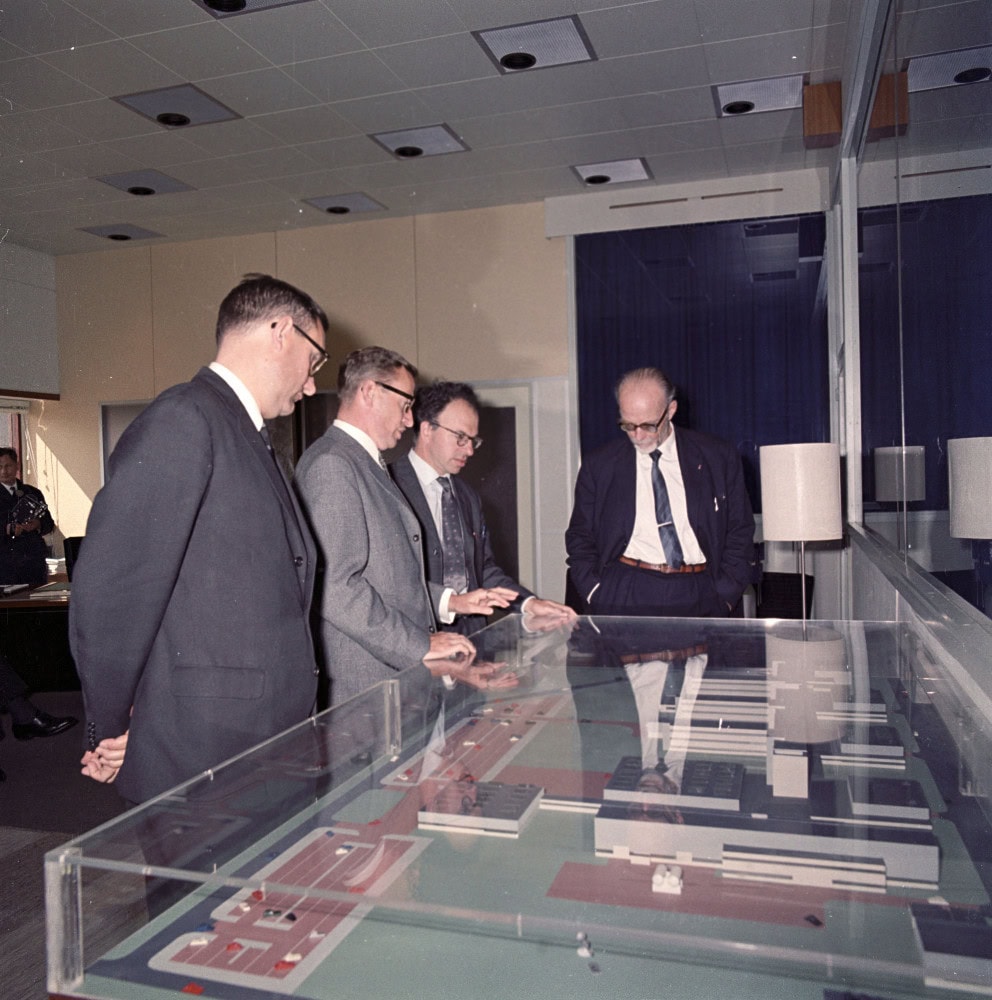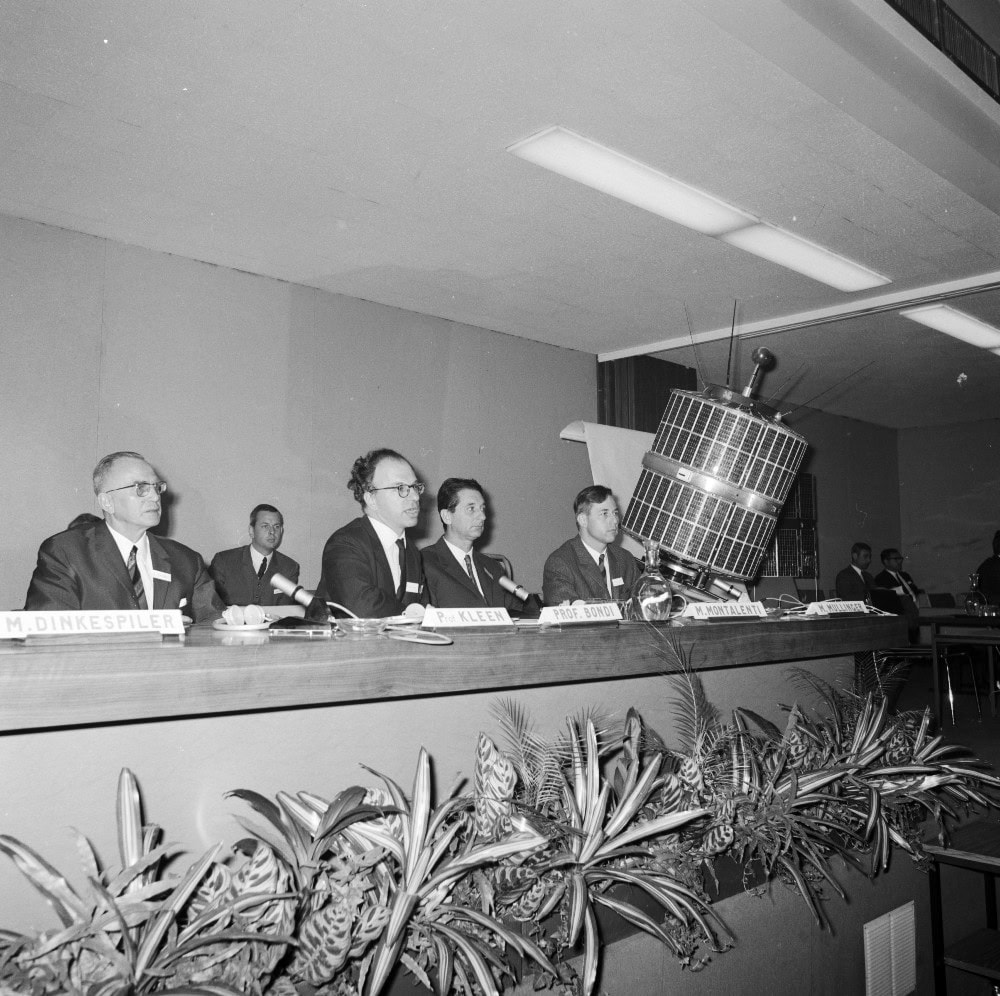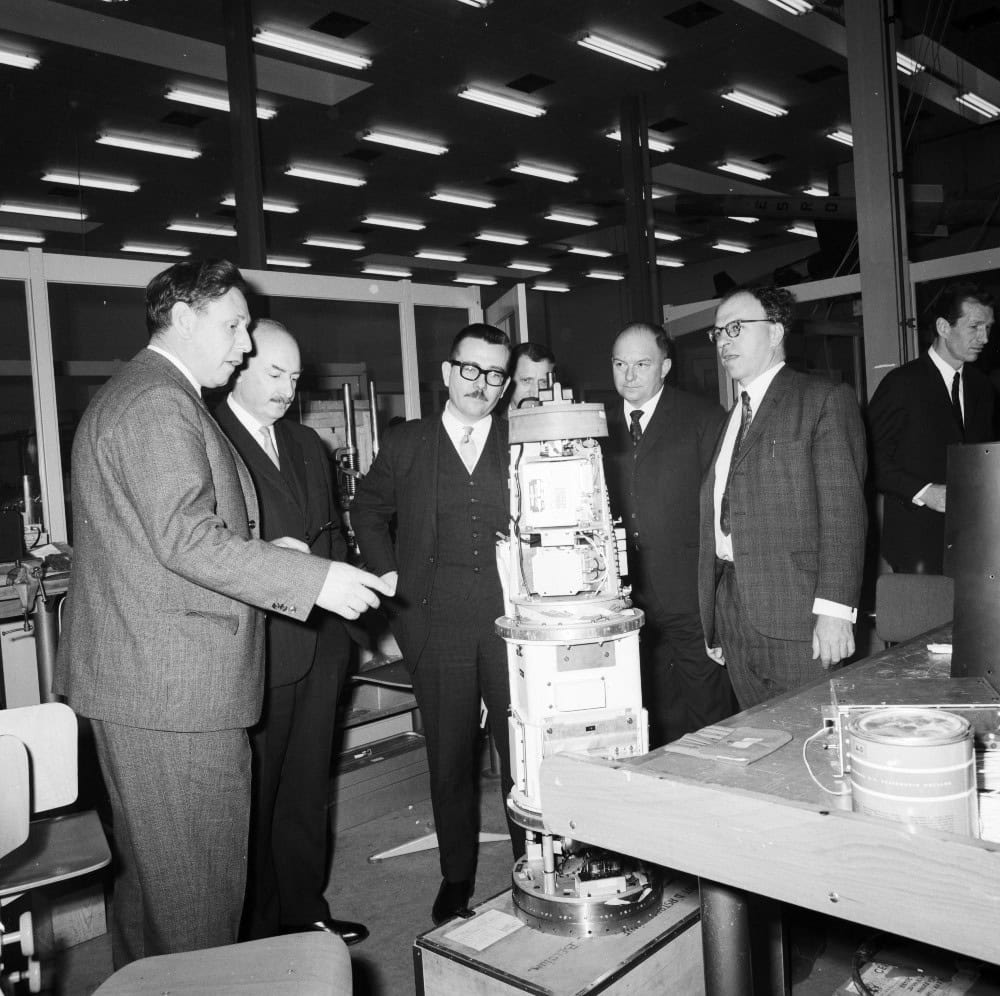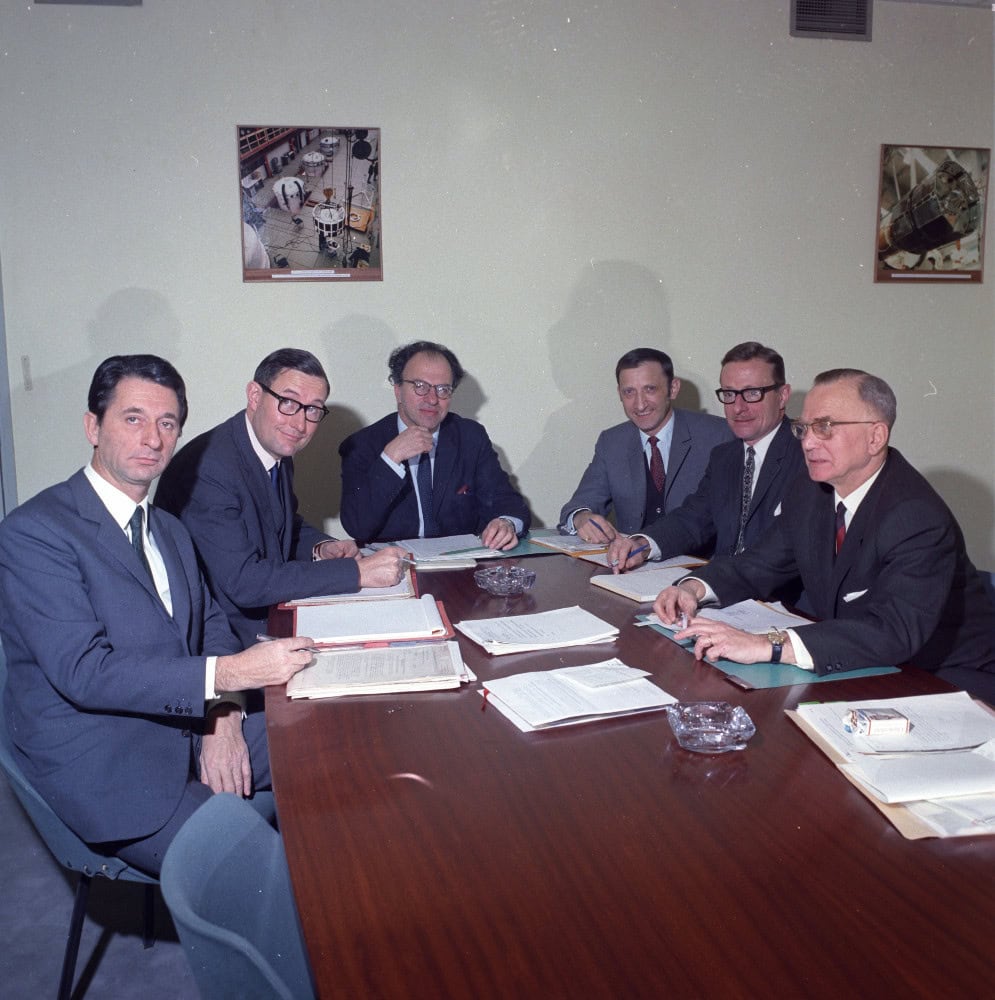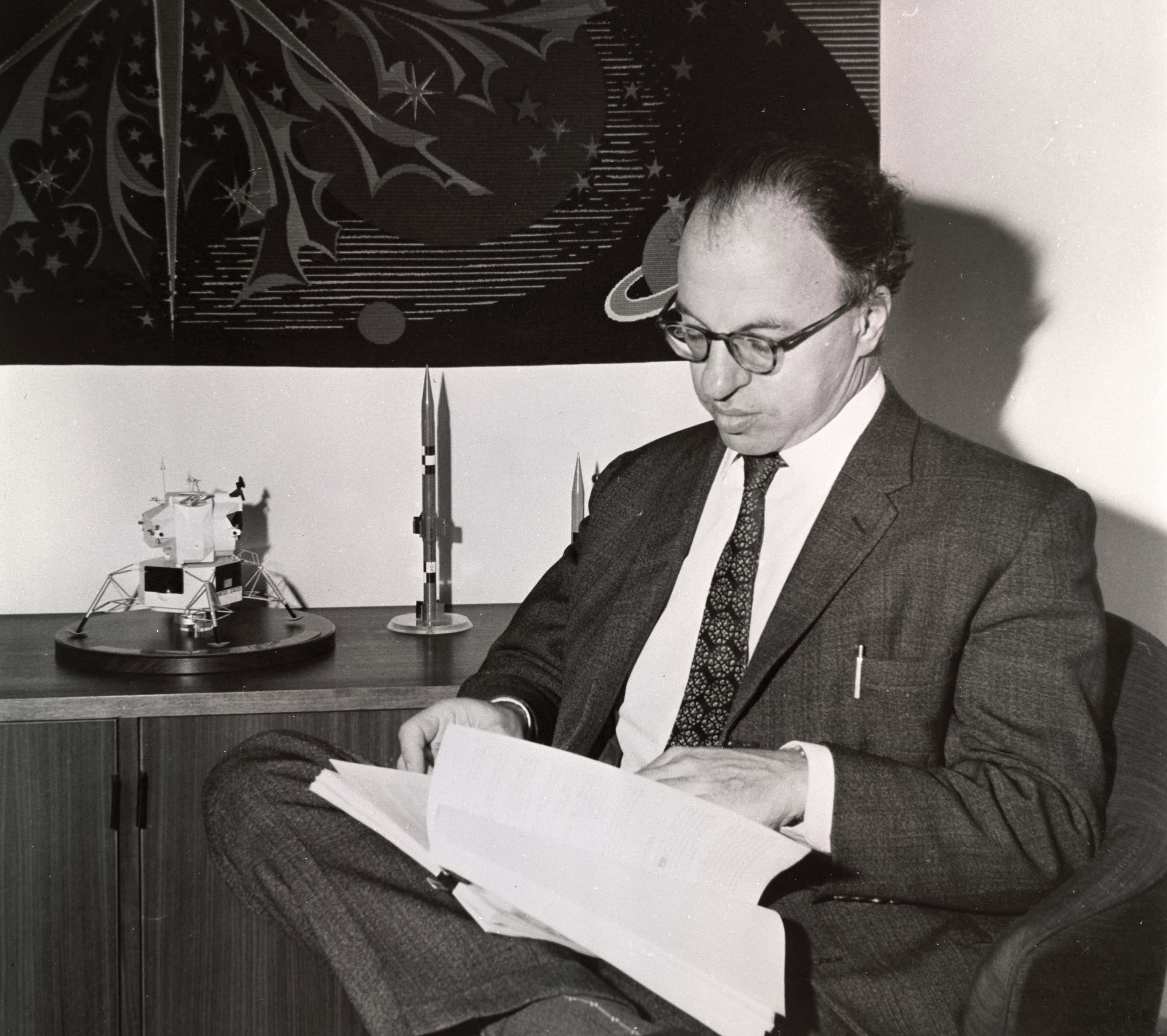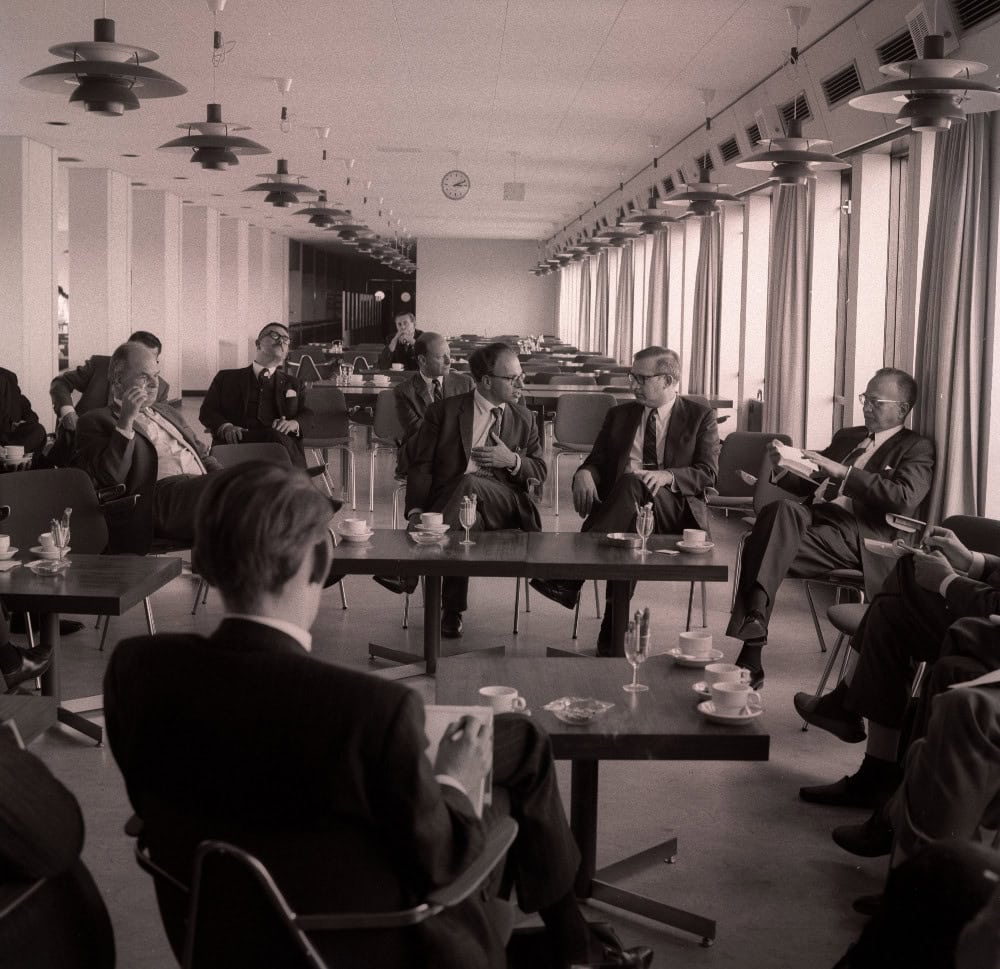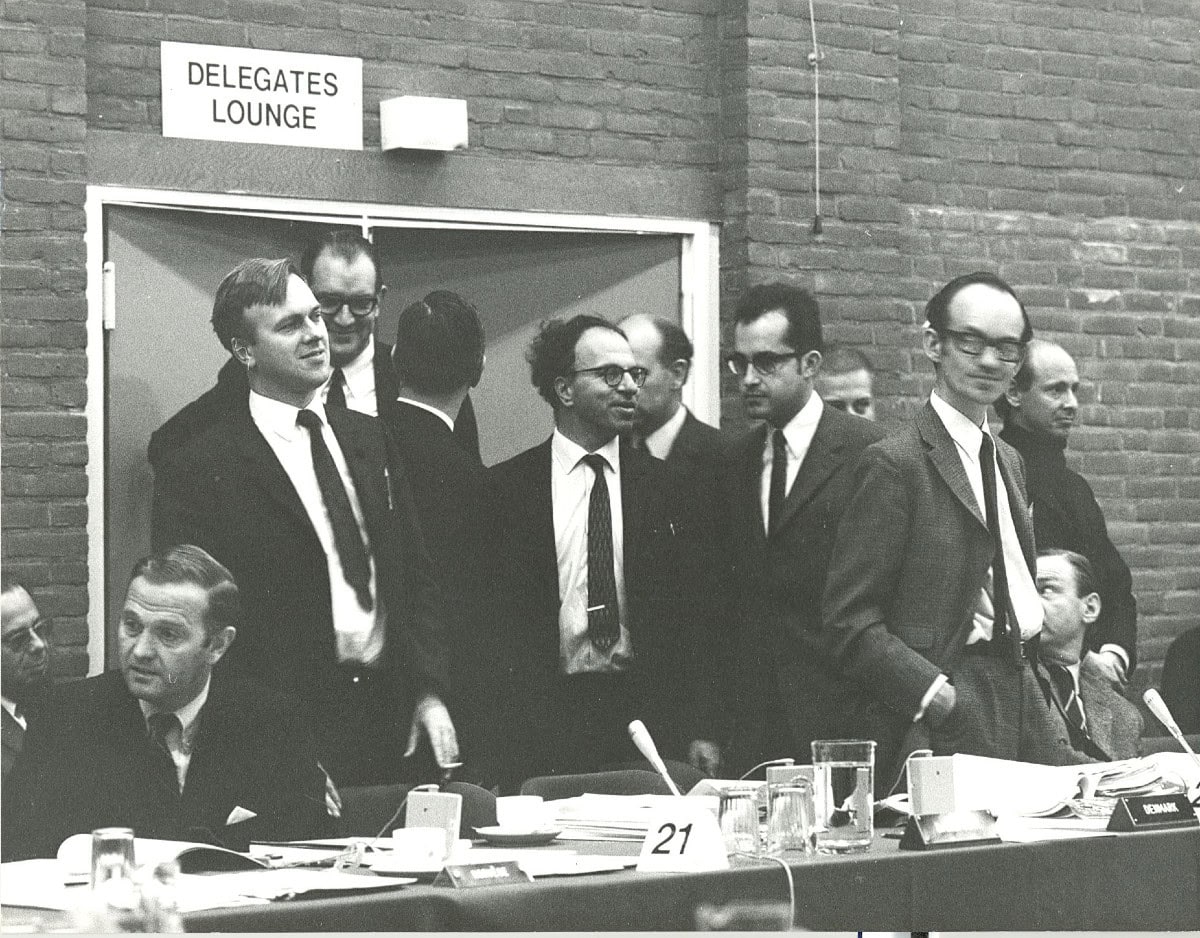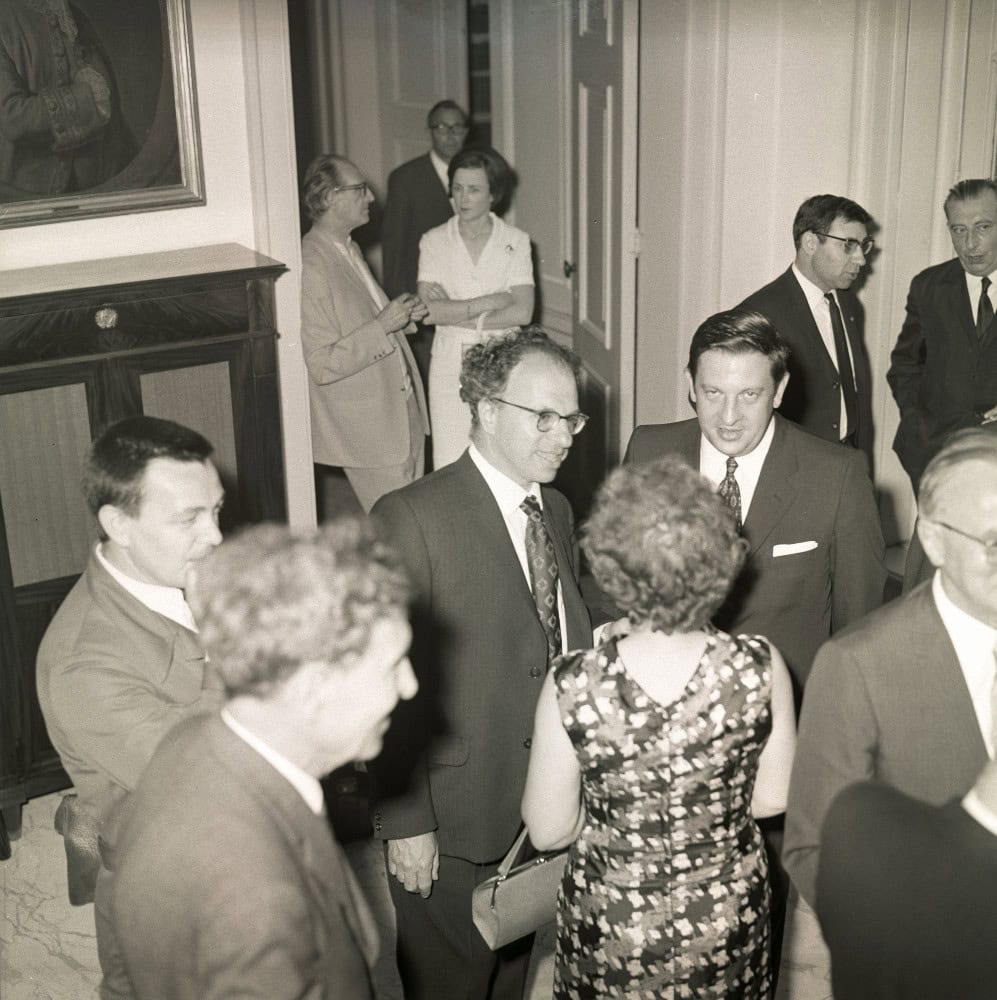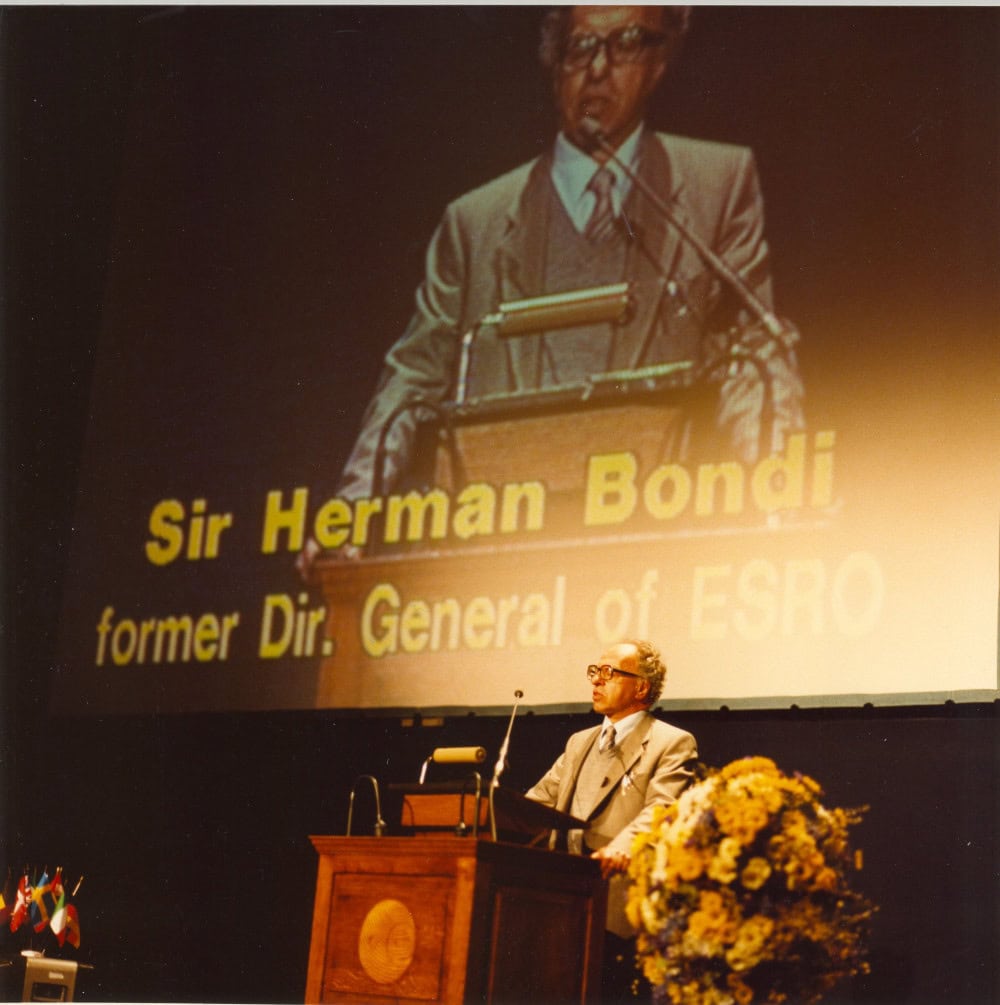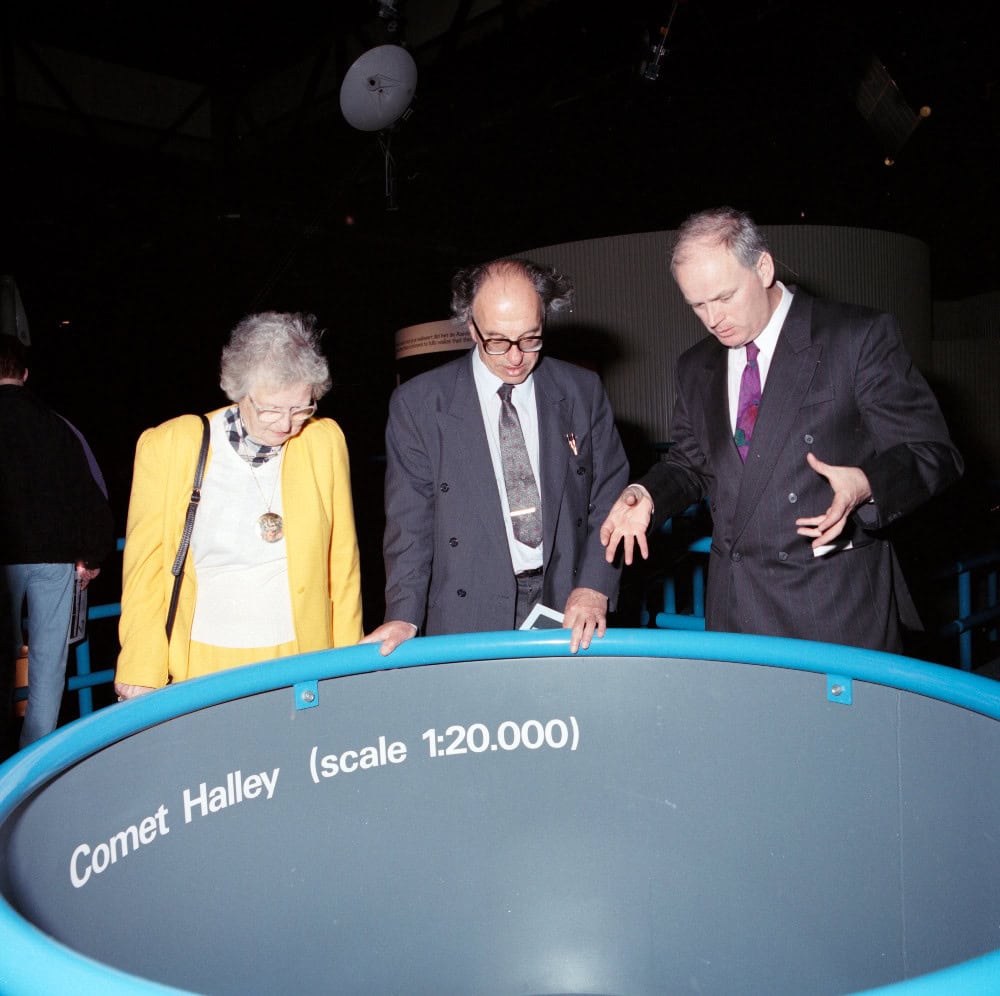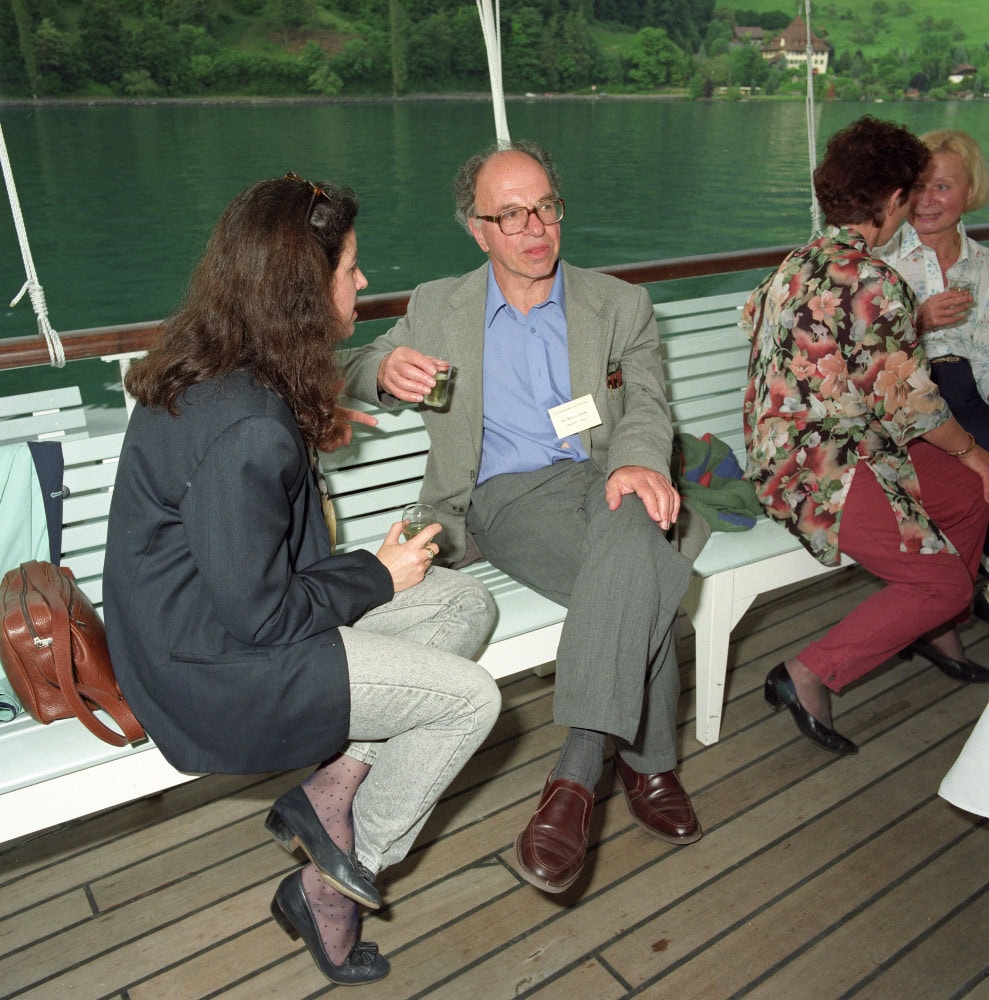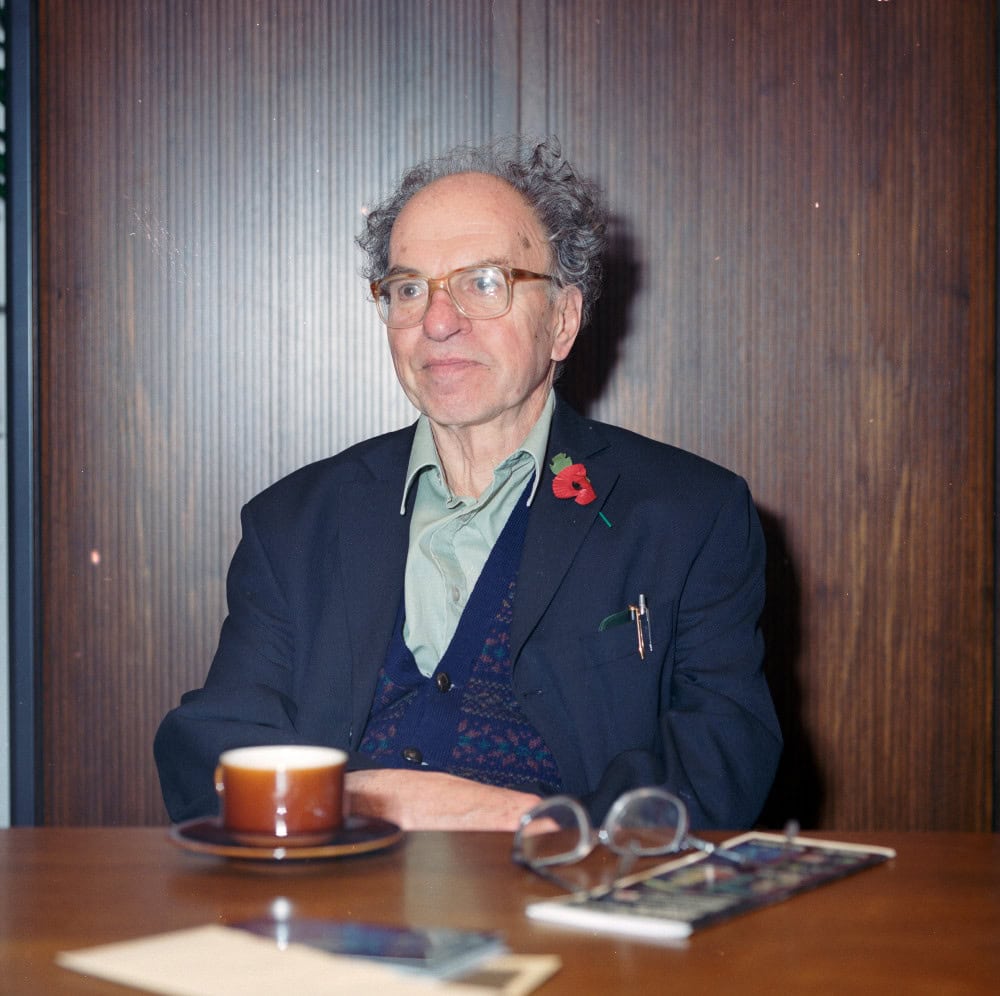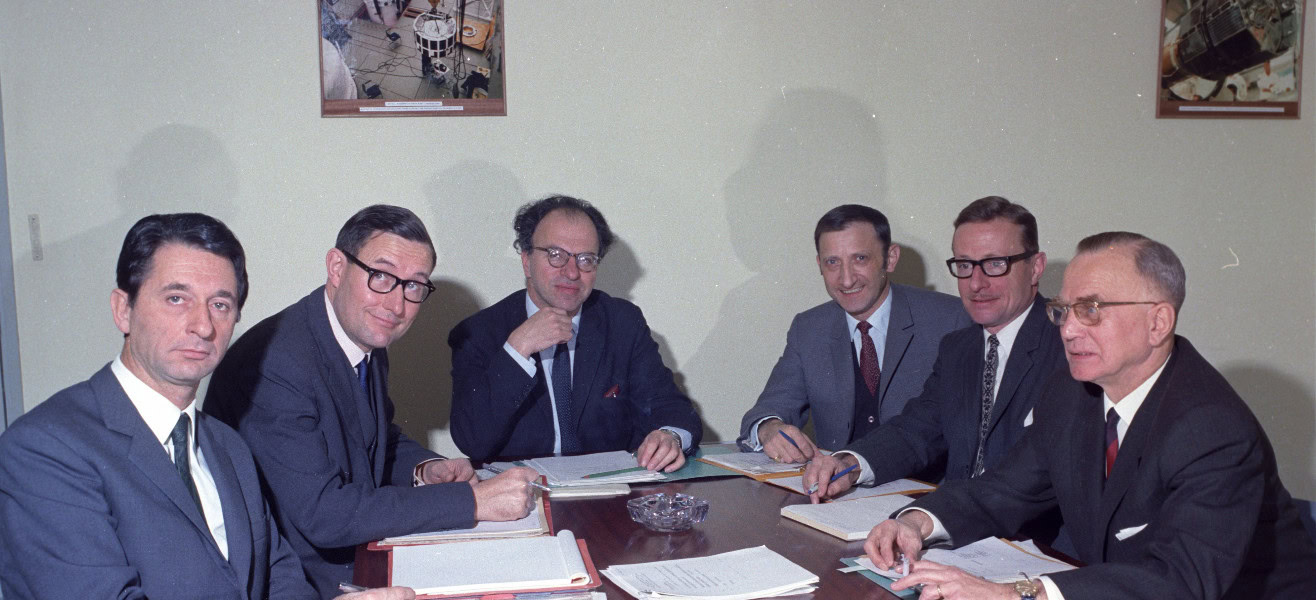
Our continuing exploration of the origins of European activities in space focuses this month on one of the major scientific personalities of the turbulent early years. Join us as we investigate the legacy of Hermann Bondi’s mandate as Director General of ESA’s predecessor ESRO, with the help of a newly-transcribed interview, published by the Historical Archives of the European Union.
Professor Sir Hermann Bondi was a renowned scientist, well known for his career before and after his term as ESRO’s second Director General (1967-1971), but less so for this ESRO period. An Anglo-Austrian mathematician and astronomer, he enjoyed long associations with Cambridge University and King’s College London during his professional life. He rose to prominence through developing the steady state model of the universe with Fred Hoyle and Thomas Gold in the late 1940s as an alternative to the Big Bang theory, and went on to make important contributions to the theory of general relativity. He was the UK’s candidate for Director General of ESRO in 1967 and took up this position on 1 November of that year.
In this never-before published 1992 interview Bondi reflects on the upheavals of the years of ESRO’s ‘mid-life crisis’ and his role in steering the organisation through them intact.
The interview took place in Palermo on 5 November 1992 and the interviewer was Professor John Krige, leader of the ESA History Project. In it, Bondi and Krige discuss the details of his 1967 appointment to ESRO, his return to the UK in 1971 to become Chief Scientific Advisor to the UK Ministry of Defence, and the intervening years in rough chronological order, touching on circumstances that hindered (or salvaged!) European collaboration, and on debates at the time within the international space and scientific community.
Bondi the manager
Bondi inherited the lead of a newly streamlined organisation, following implementation of the Bannier Report, intended to address its financial and political problems, but faced an uphill battle to reinstall faith in ESRO, from both outside and within. In his own words, while the atmosphere was expectant, he arrived in an organisation that had “lost some self-confidence” and suffered from a “lack of decisive leadership”. Alongside this were major financial and legislative challenges, including a period of where ESRO operated outside its Convention, with an annual budget and unanimity required on every decision.
In an important watershed one year later, Bondi secured agreement on a three-year level of resources for ESRO at the November 1968 European Space Conference in Bad Godesberg. An achievement, made in the context of changes to the management of ESRO satellite projects and the first successful launches (of ESRO-2 and ESRO-1), that restored legislative powers to ESRO and was fundamental for the future planning and delivery of its scientific objectives.
As the interview demonstrates, the need to address challenges and avert crises which threatened the existence of ESRO was a recurring theme and took up much of Bondi’s energy. These ranged from issues with the assignment of contracts and formation of consortia to budget problems and inter-governmental dissent, and were resolved with methods that have since become familiar terms in the pages of ESRO history, including the principle of just return, package deals and the ‘a la carte’ system.
Bondi the scientist
The interview also touches on technical subjects and elaborates on Bondi’s contribution to the successful launches of the first generation of ESRO satellites and more. The discussions of ESRO’s ability to manage large satellite programmes lead to a section where he lays out his advocacy for project management in space activities (then in its infancy) and talks about the psychology of managing scientists and engineers and on relations between the two. On that topic, there are some fascinating references to something clearly discussed in the 1960s and 1970s as the transatlantic factor, and its accounting for differences in production rates between the US and Europe.
Bondi also explains the line he walked to keep ESRO together during the shift in emphasis from pure science to the inclusion of applied work. In this, he balanced the need to respond to the interest of European governments in applications with taking on board concerns within ESRO and from his own community, that “something which was fundamentally the scientists’ baby would no longer be theirs”. The conversation with Krige goes on to touch on the corresponding need for an independent European launcher and on debates within ELDO and ESRO on the commercialisation of launchers. It gives insights into the conflict between national space programmes and international collaboration and the careful path that Bondi trod in the light of ESRO’s civilian status and neutral Member States. We also discover his doubts about ESRO involvement in the Spacelab programme (and more generally human spaceflight) and his aversion to protracted negotiation – “negotiations always hold up things”!
Bondi the person
Bondi’s personality comes across strongly in these pages – his unwavering self confidence but also his self awareness – and he talks openly about his strengths and limitations (“I am not a very innovative person” is a surprising admission!) and his “known inability to say no” to job offers. The interview offers something to take away for anyone who manages either people or projects, even from a distance of 60 years. It also confirms Bondi’s deserved reputation as a great scientist, dedicated leader and engaging personality.
Read more
The interview is published in collaboration with our colleagues at the Historical Archives of the European Union, hosted at the European University Institute in Florence. HAEU’s website also hosts the full collection of material from the Oral History of Europe in Space project, including transcripts of almost 60 interviews with many of the important players from ESA Member States from the formative years of ESA.
ESA’s obituary for Professor Sir Hermann Bondi
ESA Archives space glossary and space timeline