The latest opening of historical photographs from the ESA Archives make pictures from 1983 available in the SHIP database. We survey some of the space milestones that were captured by the ESA photographers in the year when the modern internet came into being and see how changes in computer technology are reflected in the picture collections. (Along with inspiring the music climbing the charts at the time, including a 1983 hit referenced in our title!)
Major landmarks
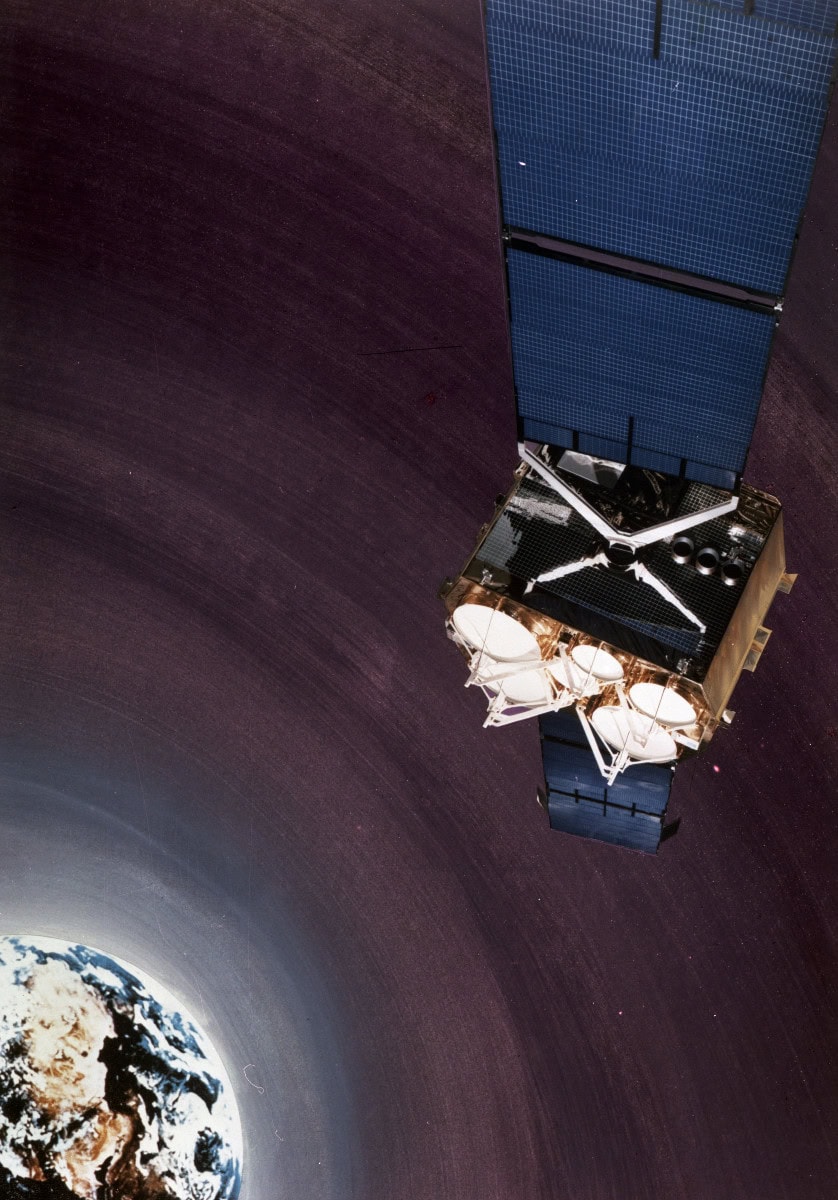
Four key launches feature in the 1983 pictures and amply demonstrate the scope of ESA’s activities by the early 1980s, from scientific and telecommunications satellites to human spaceflight, life sciences in space and transportation systems. The first of these was the launch of ESA’s x-ray astronomy satellite Exosat on 26 May by Delta rocket. After a two-month calibration period Exosat began work as an observatory in August, transmitting initial results from objects such as neutron stars, black holes and quasars. The following month saw the 16 June Ariane L6 launch of ECS-1, the first satellite in the first European regional satellite communications system, used for television, telephony and business services. Next up was the Ariane L7 promotional flight on the night of 18/19 October, with Intelsat V F-7 as its passenger, representing Ariane’s first purely commercial payload.
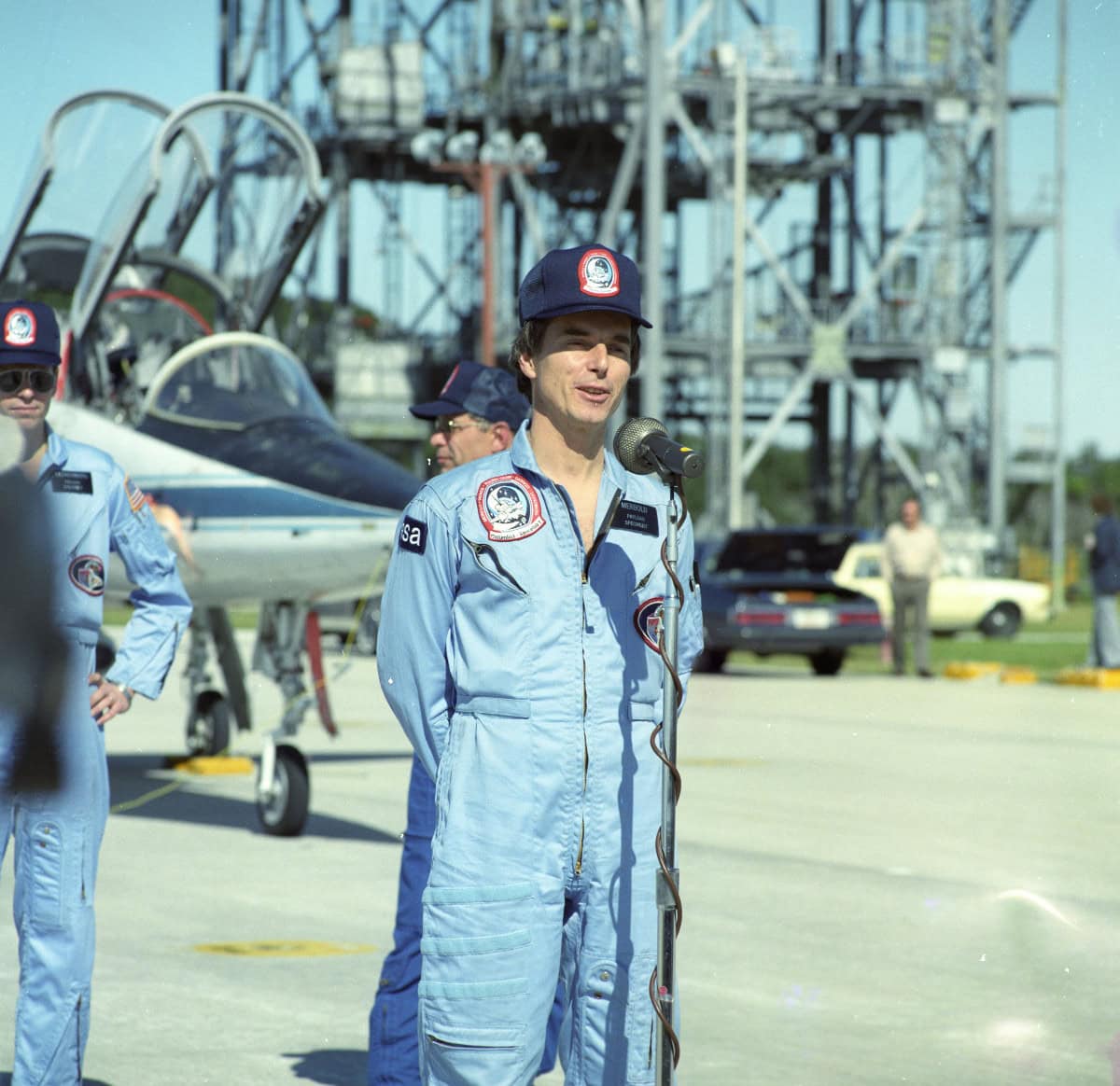
The year concluded on a high with the culmination of over a decade of ESA-NASA collaboration with the inaugural mission of Spacelab, SL-1, on the Space Shuttle Columbia STS-9 flight. Its Payload Specialist Ulf Merbold became the first ESA astronaut to fly in space on a ten-day mission that lifted off on 28 November from the Kennedy Space Center in Florida and touched down at Edwards Air Force Base (California) on 8 December.
The next generation
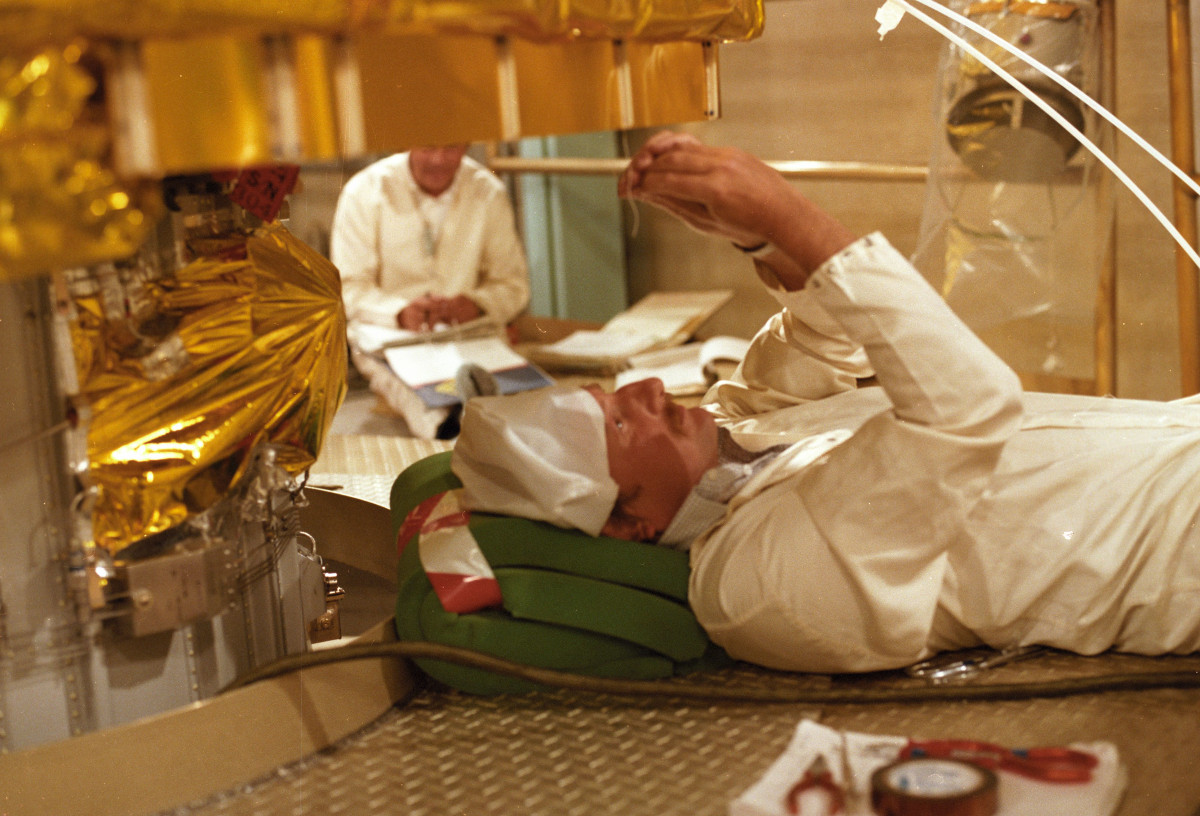
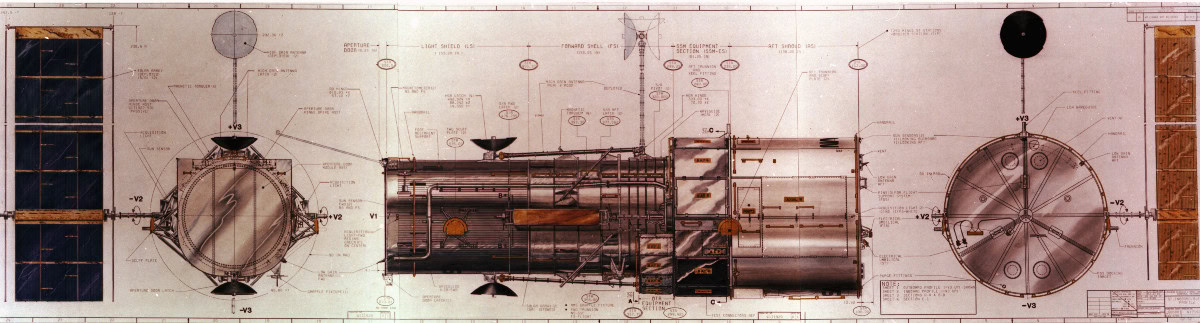
Alongside this, development work on the next generation of spacecraft continued to be documented in the photos. They include the ongoing work on the (Hubble) Space Telescope, L-SAT and ISPM (later renamed Olympus and Ulysses, in keeping with ESA’s frequent use of classical references, drawing on shared European heritage). Among them are some wonderful engineer’s drawings of the Space Telescope and some of the first series of images showing the Giotto spacecraft taking form throughout the year.
New entries include the first artist’s impression of the Infrared Space Observatory (ISO), a project that began in 1983 under ESA’s Horizon 2000 science programme and the first Swedish satellite, Viking, launched by Ariane 1 in 1986 to explore plasma processes in the magnetosphere and ionosphere, during testing at ESTEC.
The birth of the internet and arrival of CGI
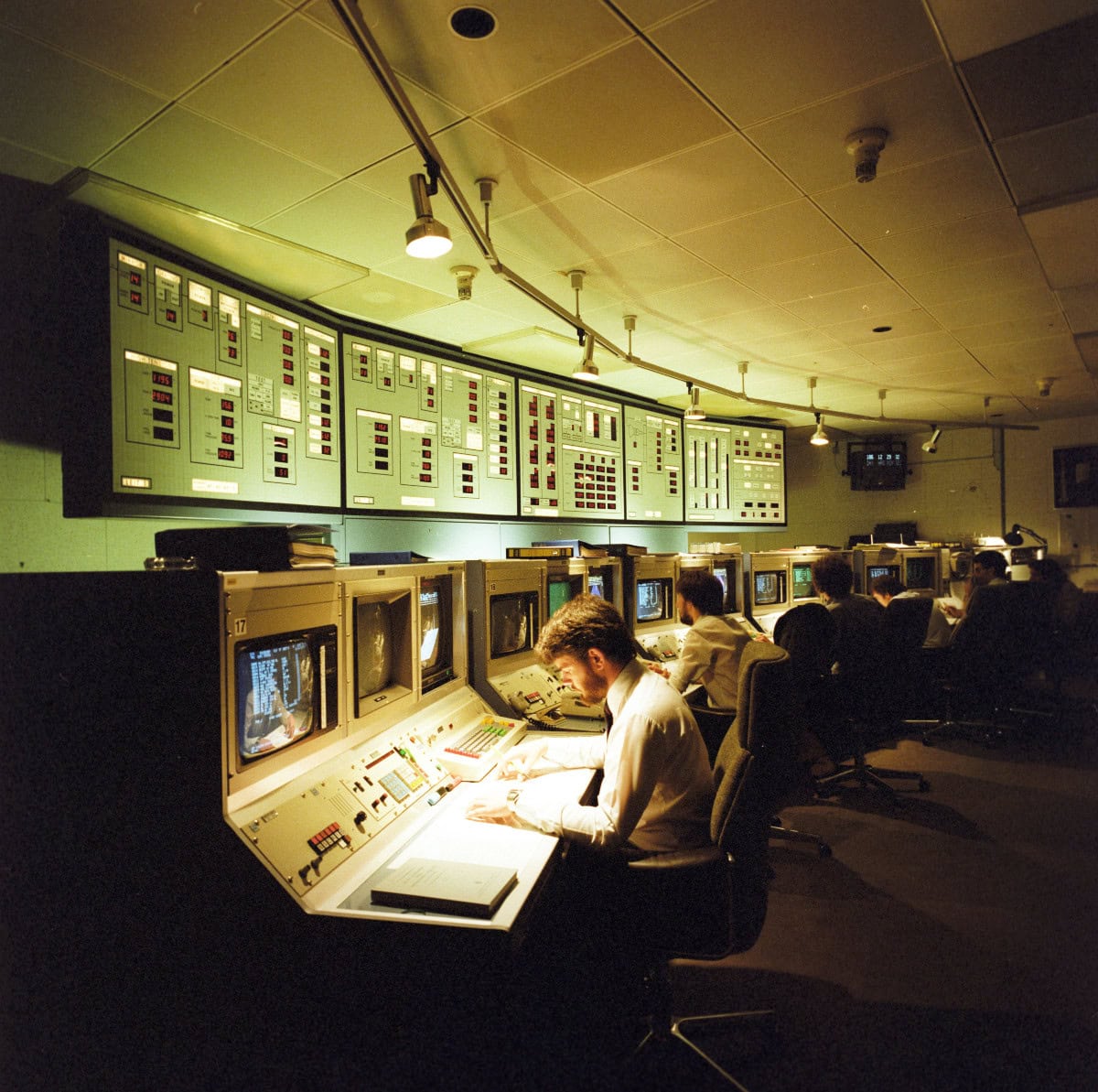
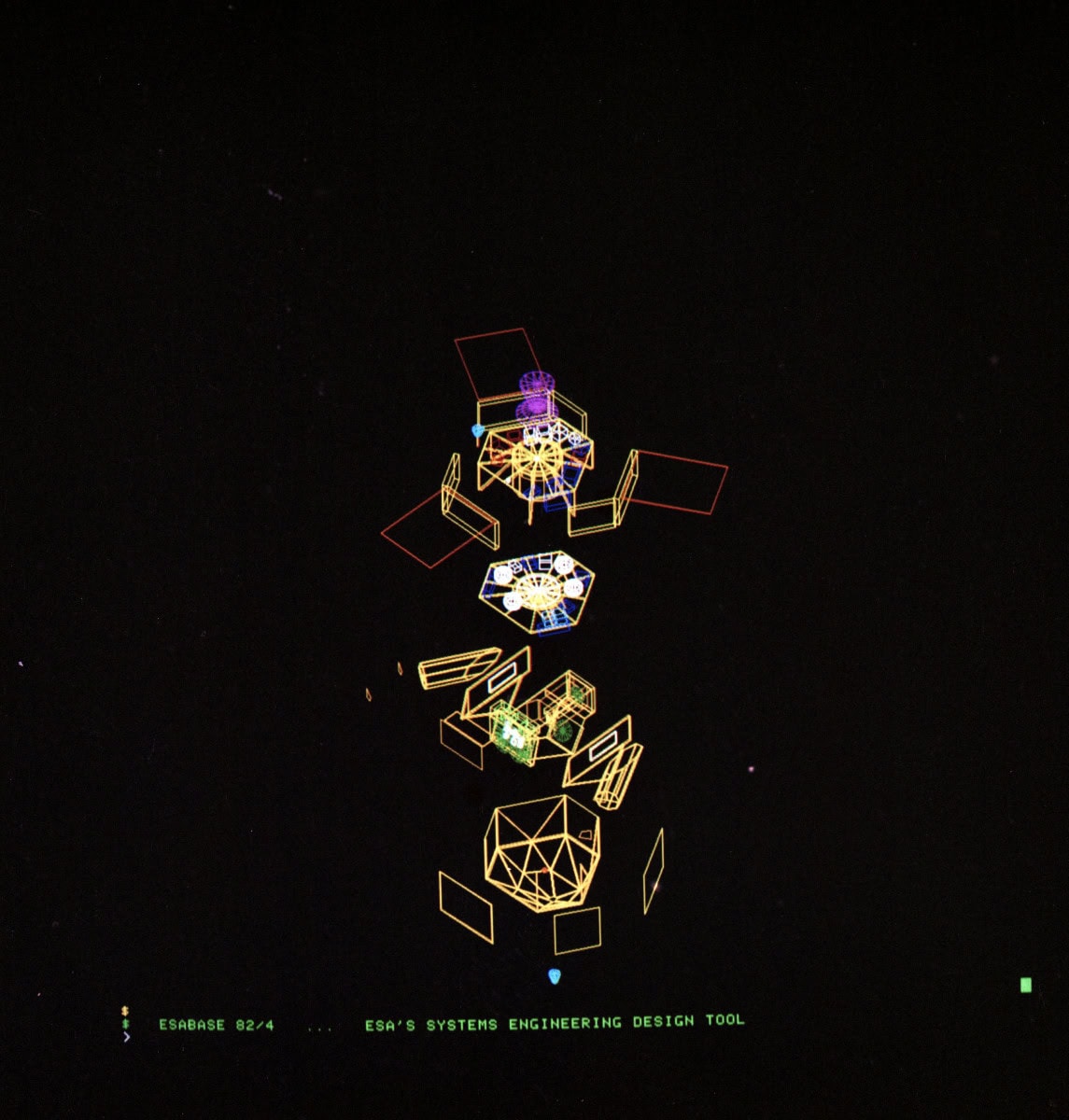
There was development of a different sort on 1 January 1983 when the ARPANET network adopted TCP/IP protocols, laying the foundation for the modern internet on a day that some computer history timelines now call the ‘birthday’ of the internet. At the same time, and within ESA, technological advances included new modelling tools for thermal engineers (explained in a February 1984 ESA Bulletin article).
Another aspect of these changes can be seen in the ESA photos, with growing number of computer-generated images (CGI) of future satellites and spacecraft, including ISO. While these did not immediate replace the artists impressions of the 1970s, they are evidence of a discernible shift in the way future missions were depicted from the 1970s to the 1980s, either reflecting or inspiring contemporary visions of space in popular culture. The lyrics of the May 1983 hit Living on Video are a perfect example - ‘flying through hyperspace in a computer interface’ - and are also used in our title above. (Congratulations if you spotted the reference!)
Earth-based activities
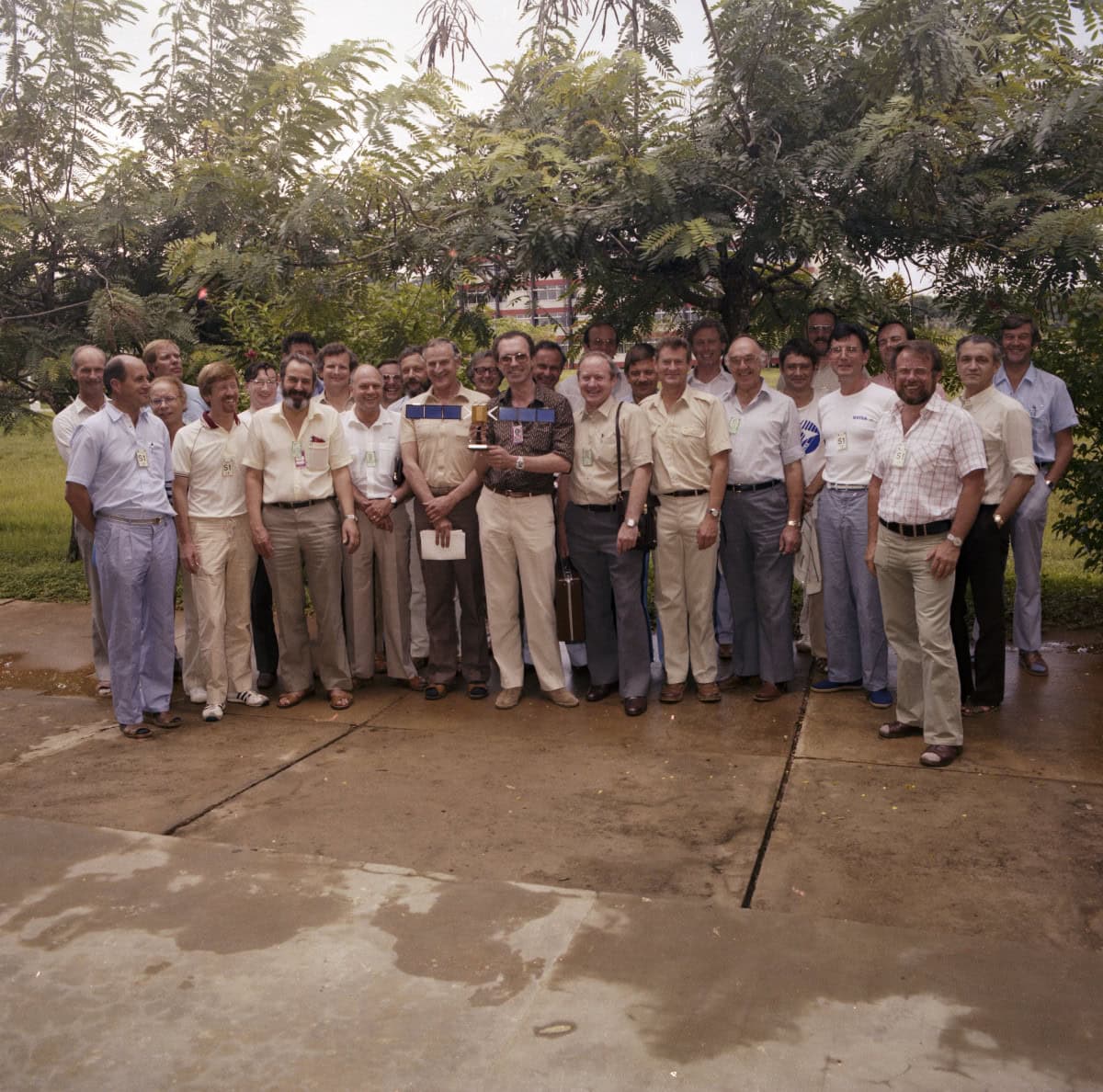
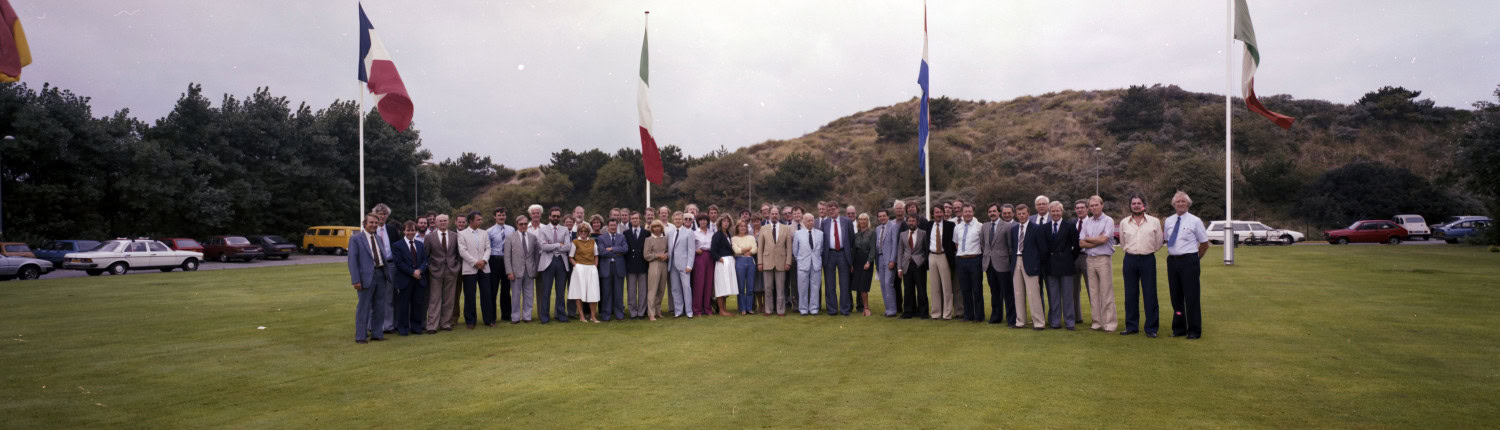
Back on Earth, the photos also illustrate working life at ESA in 1983 covering team portraits, prominent visitors to ESTEC and construction works across the site, along with outreach and public relations in the form of ESA participation in exhibitions across Europe.
Visits included public figures ranging from the Danish Minister of Education in January to the President of Italy’s National Research Centre in November, and delegations from Japan and NATO in October. During a September one-day official visit to the Netherlands, the British Prime Minister, Margaret Thatcher was accompanied around ESTEC by Director General Erik Quistgaard, Technical Director Massimo Trella and ESA’s newly appointed Director of Scientific Programmes, Roger Bonnet, who had taken up his position in May.
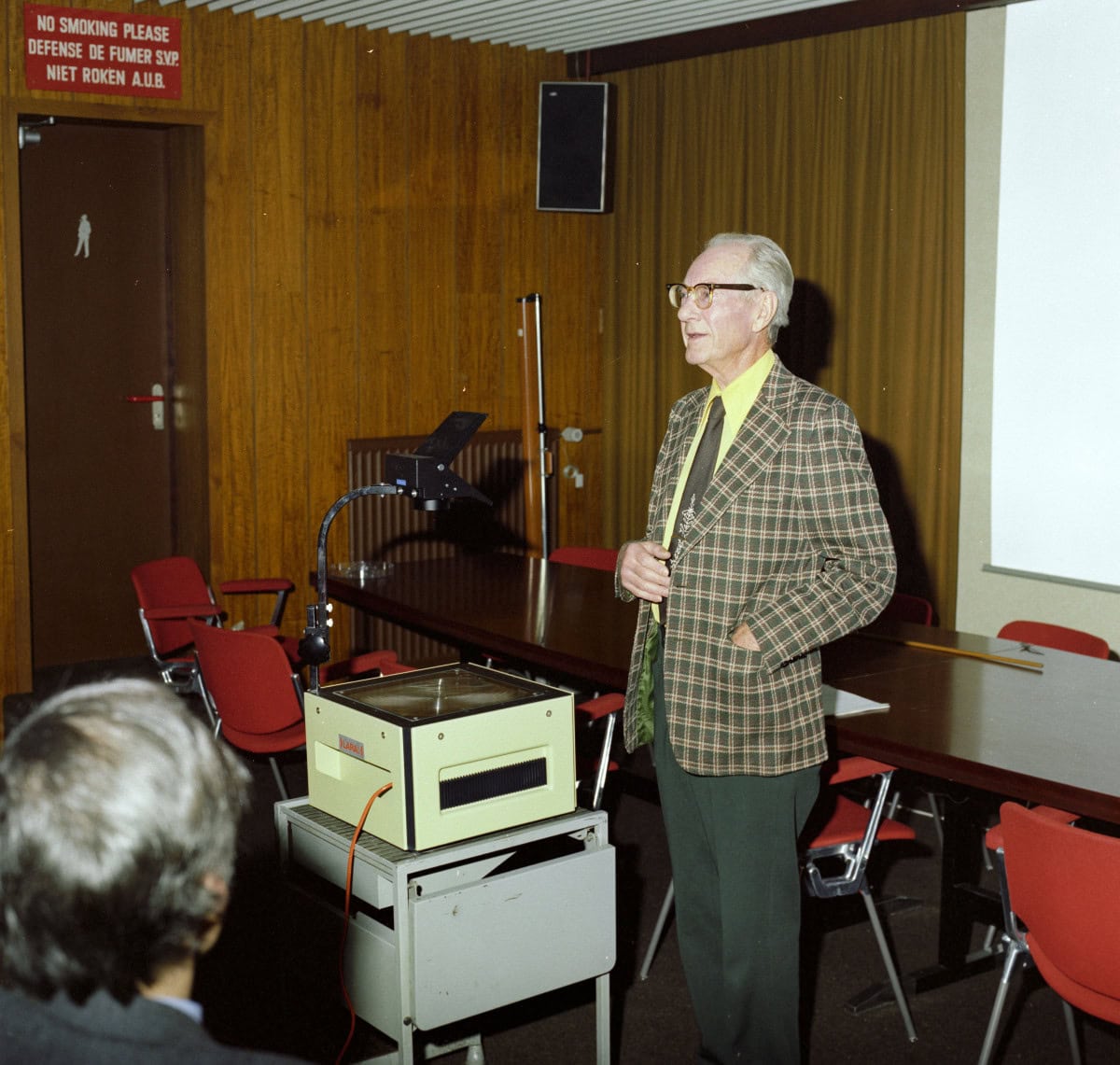
Space-related VIPs included two of the NASA STS-7 astronauts in September (Mission Specialist Sally Ride, the first American woman to fly in space, and Pilot Frederick Hauck) and one of the world’s foremost experts on comets, Professor Fred Whipple, who gave a talk in March looking forward to the 1986 apparition of Comet Halley.
ESTEC expansion was documented in photos of construction work on extensions to the test facilities, including the Large Space Simulator (LSS). And further afield, the ESA photographers were also on hand to capture the construction of the second Ariane launch site, ELA-2, at the Guiana Space Centre in Kourou.
The ESA presence at space-related exhibitions spanned western Europe taking in Rome (Rassegna Elettronica in March), Ghent ('Europa in de Ruimte' at the Rijksuniversiteit in April), Paris (Le Bourget from 26 May to 5 June) and Cologne.
Strangely, there are no pictures of Bourget itself. Instead, the collections contain a photo of the Space Shuttle Enterprise on board its Boeing 747 transport aircraft, on a fly-past above ESTEC on 5 June on its way back to the US from Paris... This could be a reflection in the photo collections of a change in provision, where the ESTEC photographers no longer covered activities across all of ESA and worked exclusively within ESTEC.
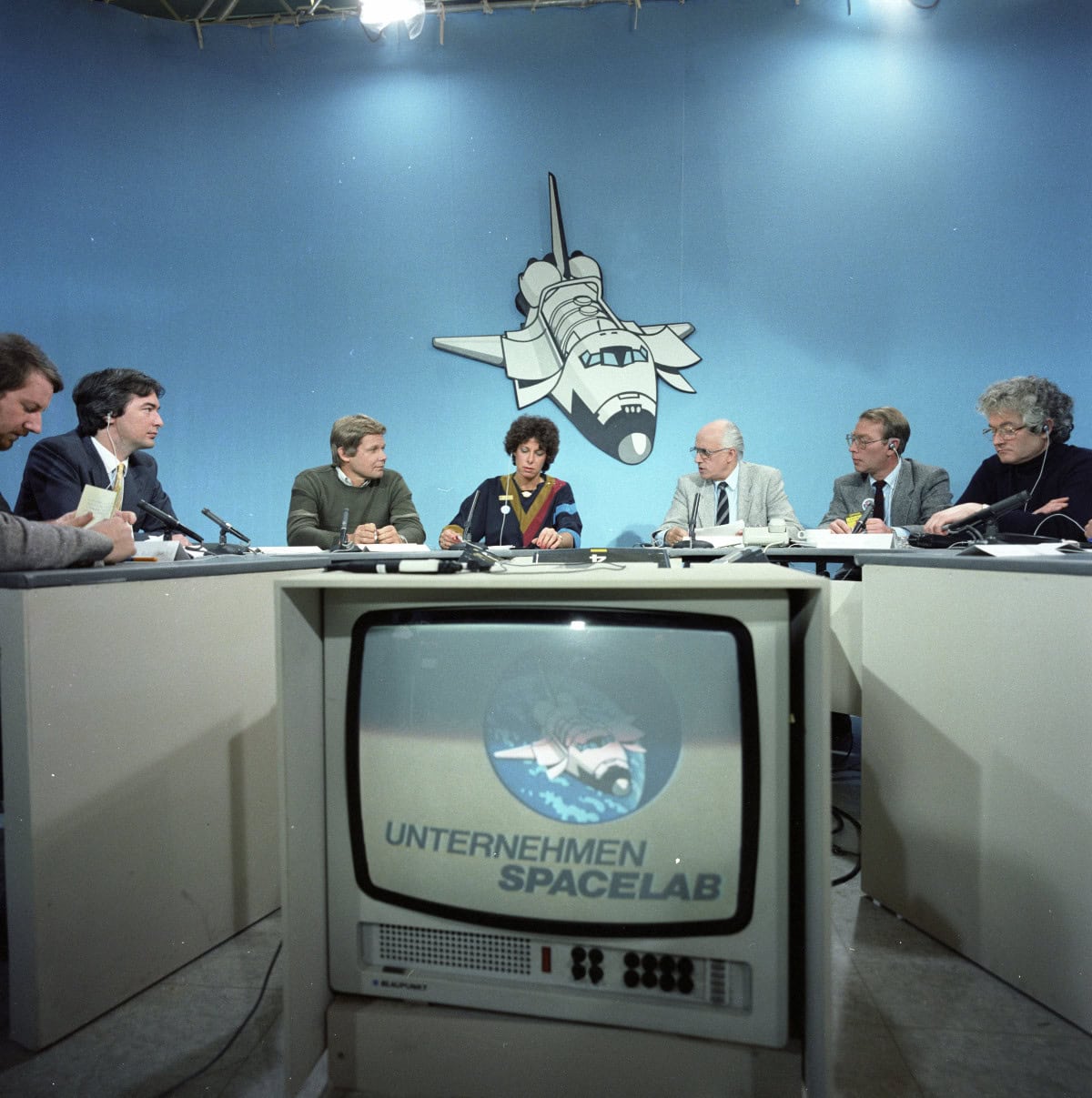
Maintaining the shuttle connection, this round-up concludes with one of the last major events of the year, for one its highlights – or rather a series of events and an international industrial exhibition at Porz-Wahn, Cologne, planned around the Spacelab flight on 28 November. The German Space Agency’s Cologne-Porz site was the principal news centre for Spacelab in Europe, giving up-to-date information on the flight to European media and the public. The programme included three days of special events: an Industry Day, an International Space Day and a Youth and Space Day. Within the series of photographs we think we recognise a panel on the International Space Day that included representatives of ESA and NASA and a link-up between ESA Director General Erik Quistgaard, Heinz Riesenhuber, the German Federal Minister for Research and Technology (who would later chair ESA Council at Ministerial Level in 1987), and ESA astronaut Ulf Merbold, on board Spacelab.
Browse the photos
To see the new images, simply search for ‘1983’ in the SHIP database, or refer to our highlight on SHIP for additional details of its functionalities.
Read more
More about ECS-1 in March Object of the Month
The history of Spacelab by Michel Bignier in Spacelab’s Development and Highlights from Exosat's Early Orbits, by A. Peacock, in ESA Bulletin 36, November 1983
MANIP and MINIP: New Modelling Tools for the Thermal Engineer, in ESA Bulletin 37, February 1984