As we embark on ESA’s fiftieth year, we are pleased to open the collection of photographs from 1979 – a year marked by one of the first major triumphs for ESA with the inaugural launch of Ariane, and unexpected tragedy with the death of Robert Duhem, the ESA photographer behind many of these historical pictures.
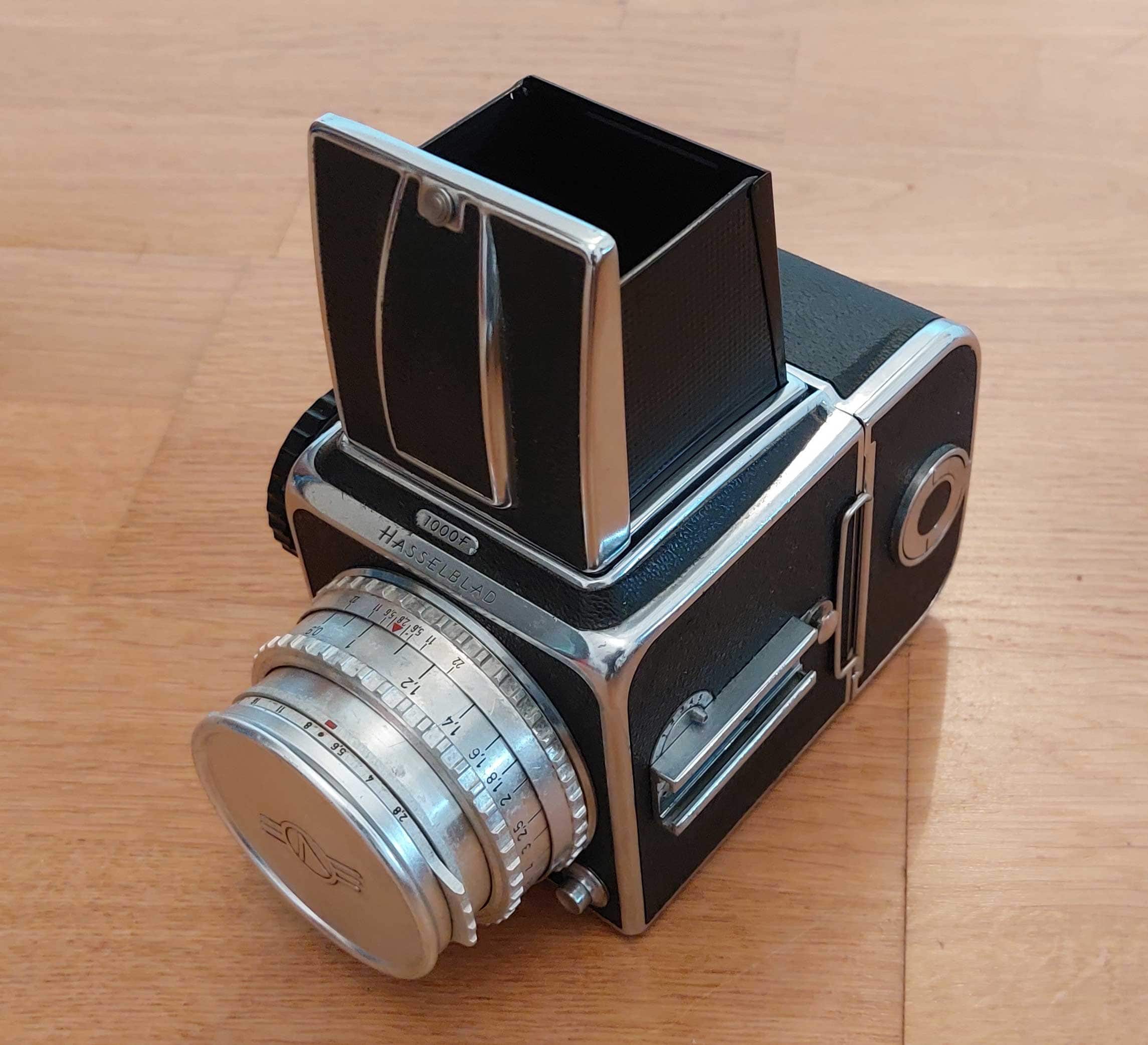
One of the first news articles published on this website, back in February 2023, talked about the collections of historical photographs held by the European Centre for Space Records in ESRIN. It mentioned the enormous photographic inheritance from Robert Duhem and H. Burer, two of the ESRO (and later ESA) staff photographers based at ESTEC throughout the 1960s and 1970s, noting that beyond their names, our records contain very little information about them.
What we didn’t know at the time was that one of Robert Duhem’s grandchildren would read this and would contact us as a result. The Archives team was delighted to talk to him last summer about his grandfather, and our conversation allowed us to fill in a lot of the gaps about Duhem’s work for ESA.
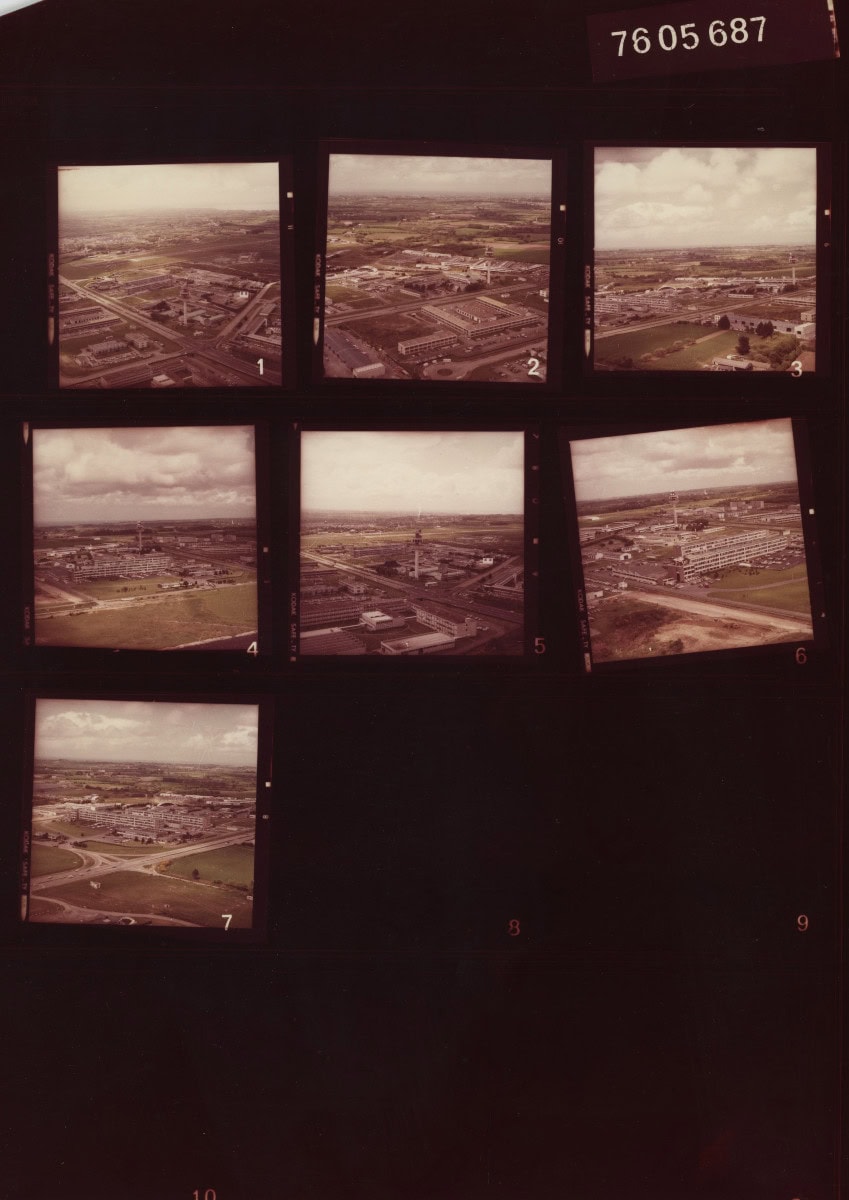
We discovered that Duhem, born in 1926, first became interested in photography in the late 1940s, and went on to establish himself as a photographer at the beginning of the 1950s, opening a photographic studio in the eighth Arrondisement of Paris in rue de Moscou. During this time, he provided photographic services for a French spirits company and worked on the production of sleeve imagery for the jazz record label Disques Vogue, often from shoots with Sidney Bechet at the Olympia music hall. He subsequently gave up his freelance work to join the French national research centre in telecommunications, CNET (Centre national d'études des télécommunications), first in St André de l’Eure, then in Lannion in Brittany, eventually setting up its photographic department. (Duhem returned to CNET as ESA photographer in 1976, taking aerial views of his former workplace at Lannion - see ESTEC-PHOTO-1976.06.687 in the SHIP database.)
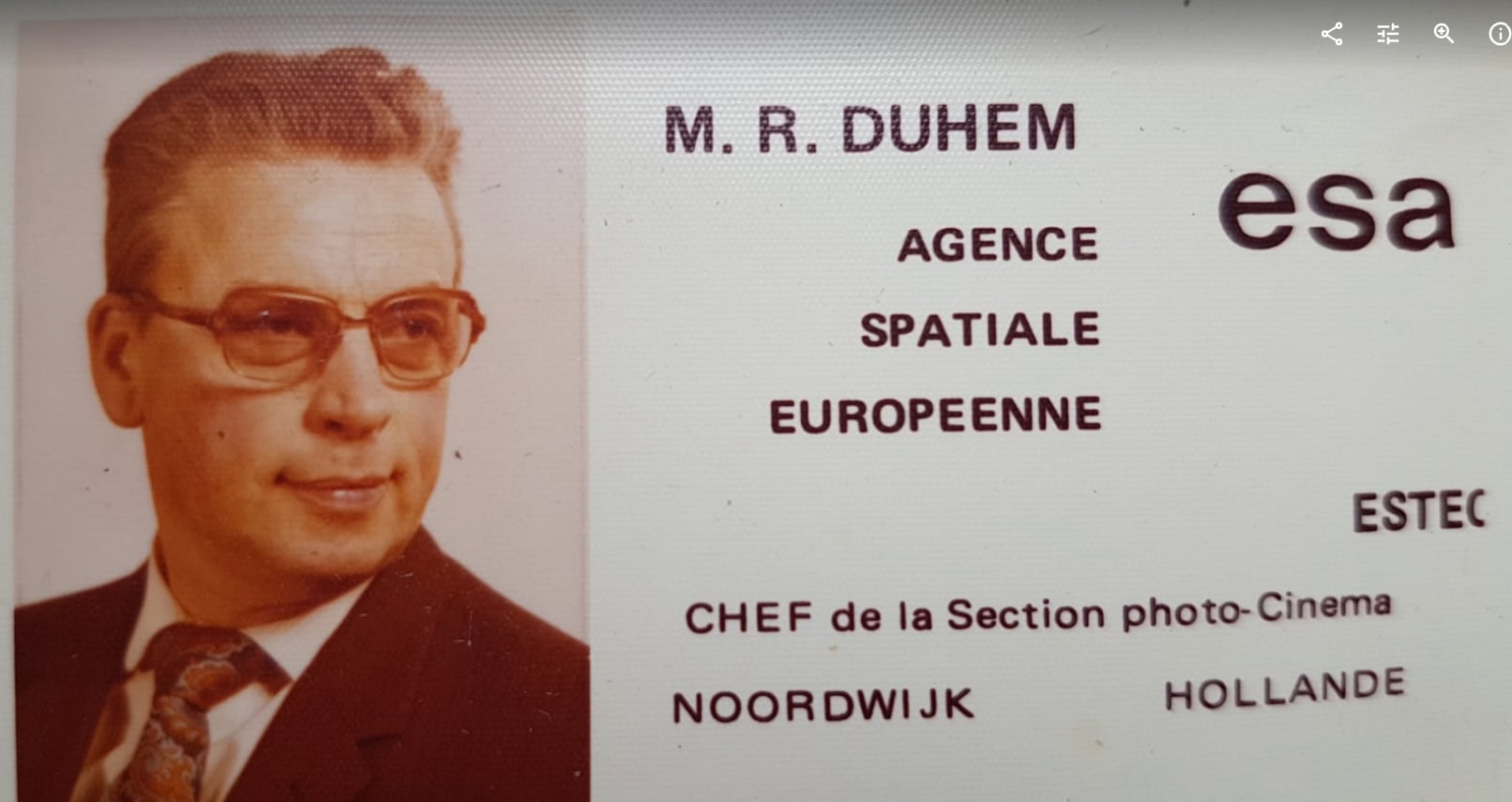
In April 1965 he took up a position with ESA’s predecessor ESRO, based at ESTEC in the Netherlands. He was encouraged by the Head of Instrumentation Division (later Deputy Director of ESTEC), Pierre Blassel, to set up a similar photo section in which he would work for the next 14 years. An ESA badge from the late 1970s, owned by the Duhem family, shows his job title as Head of the Photography and Cinema Section.
The poignant end to this story comes in July 1979, as Duhem was travelling from the Netherlands to Trébeurden (just outside Lannion) for the summer holidays. He sadly died in Louveciennes in the western suburbs of Paris on 13 July, and was buried in Trébeurden.
The Duhem family mentioned that Duhem’s wife Joséphine also worked for ESA. Armed with this new information, we were able to establish that she was also recruited from CNET and began working for COPERS as a secretary in its Technical Division at HQ in Paris in 1962, also confirming that Robert was recruited to ESRO after Joséphine. (COPERS was the European Preparatory Commission for Space Research, created to establish one of the first European space organisations, ESRO, who then took on COPERS staff members).
We also discovered that Joséphine continued to work for ESA and became secretary to Raymond Orye, Head of the Ariane Programme, at some point in the late 1970s. She retired in the late 1980s, and was included in the list of pensioners invited to a staff event celebrating 25 years of European cooperation in space in October 1989.
It is touching to note the Duhem’s mutual Ariane connection, with some of last pictures in Robert’s photographic legacy documenting the assembly and qualification testing of payloads for the first three Ariane test flights, that took place in Toulouse during the autumn of 1978.
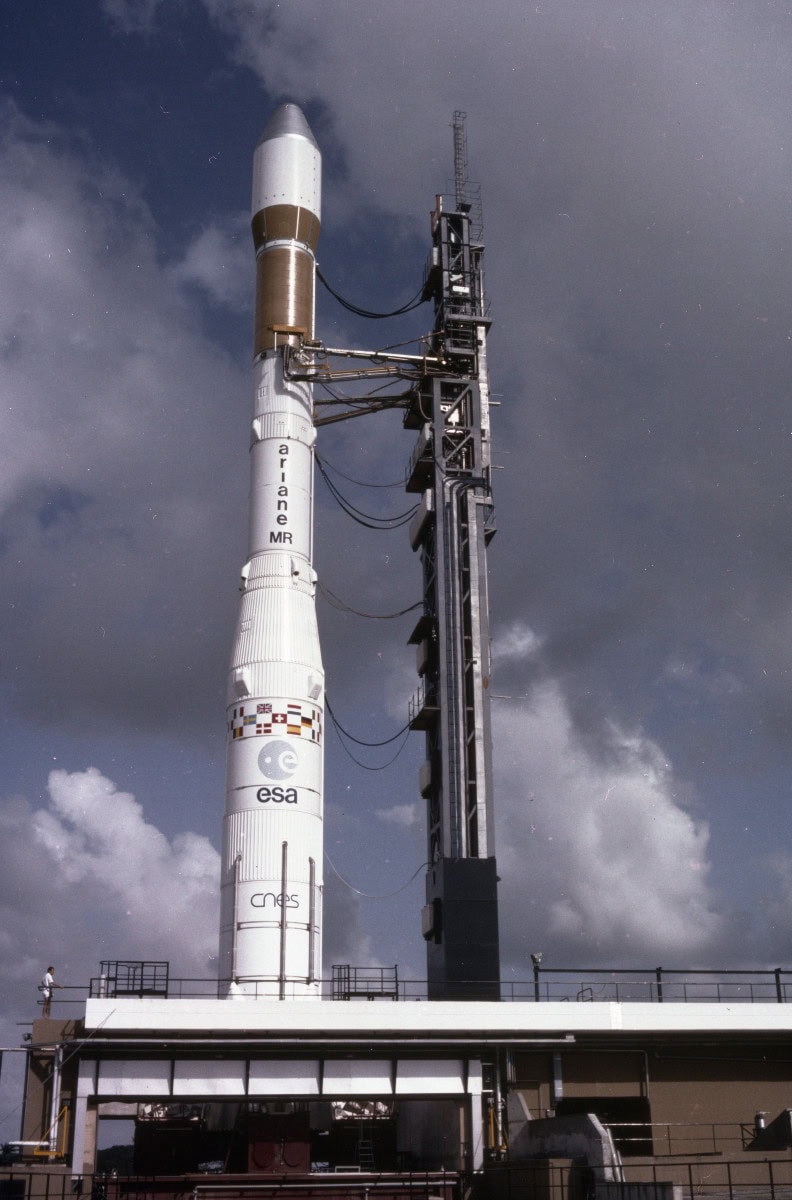
Conversely, the photographs from 1979 themselves include just one picture of Ariane by Duhem, of the launch vehicle on the launch pad at Kourou in February 1979. And as a whole, the images mainly cover other subjects, including ESA satellites such as its maritime communication satellite Marecs, Exosat and the European Communications Satellite, ECS, and a sizeable number of Spacelab-related images. This is partly since the maiden launch of Ariane took place at the very close of the year, on 24 December 1979, with some of the photographs processed in the following January and given a 1980 identification code.
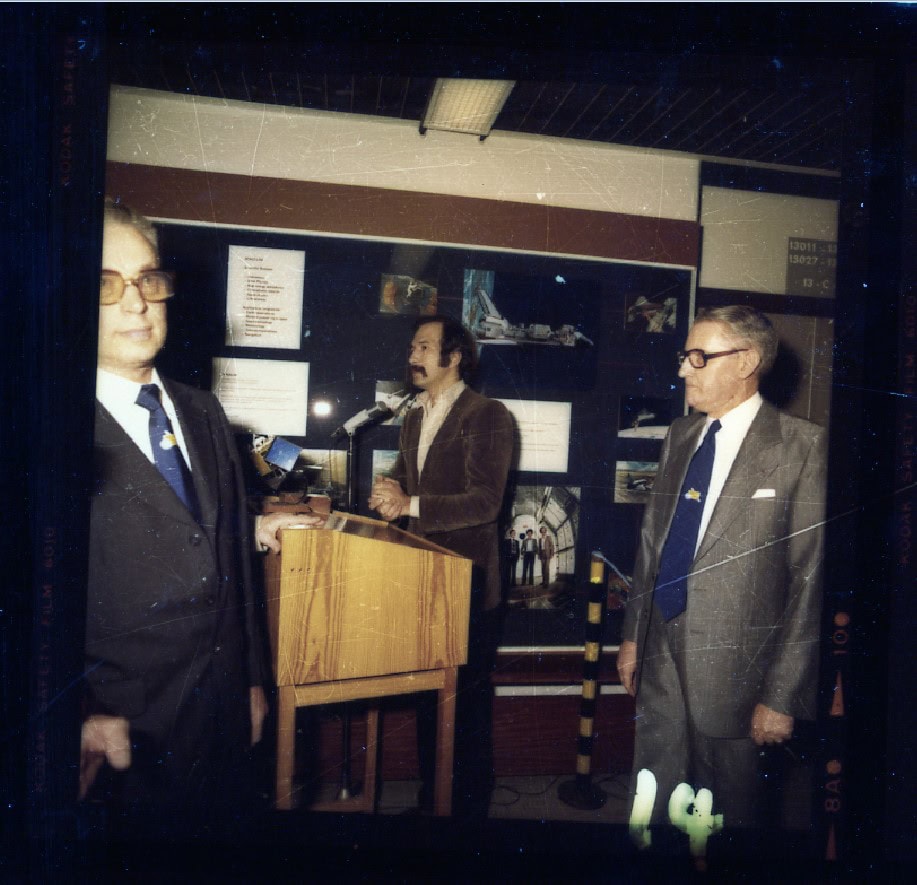
However, the major issue is that just one of the ten series of images of the Ariane launch from the combined 1979 and 1980 collections was taken by an ESA photographer (and documents a launch event at ESTEC). The remaining nine series were taken by an unknown photographer or commissioned by ESA from an external photographic agency, leaving us with a question mark over the rights to use them.
We have often asked ourselves why we have so few photographs of this historic event in our collections and also why an external photographer was used. With this new information on the passing of Duhem, we wonder whether there may be a connection? The sudden loss of one of the key ESA photographers would certainly have had an effect in terms of resources and consequently in the amount of photographs produced in the latter half of 1979. The collection from 1979 contains fewer pictures than in other years and the gap left by Duhem could be a major factor in this. Looked at in a different way, it reveals the enormous contribution he made to recording the first decades of European space activities, a photographic heritage that we are proud to safeguard. We are also very pleased to have re-established the connection between ESA and the Duhem family, whom we thank for the valuable material and information.
More information
To browse the new images, simply search for ‘1979’ in the SHIP database, or refer to our highlight on SHIP for additional details of its functionalities.