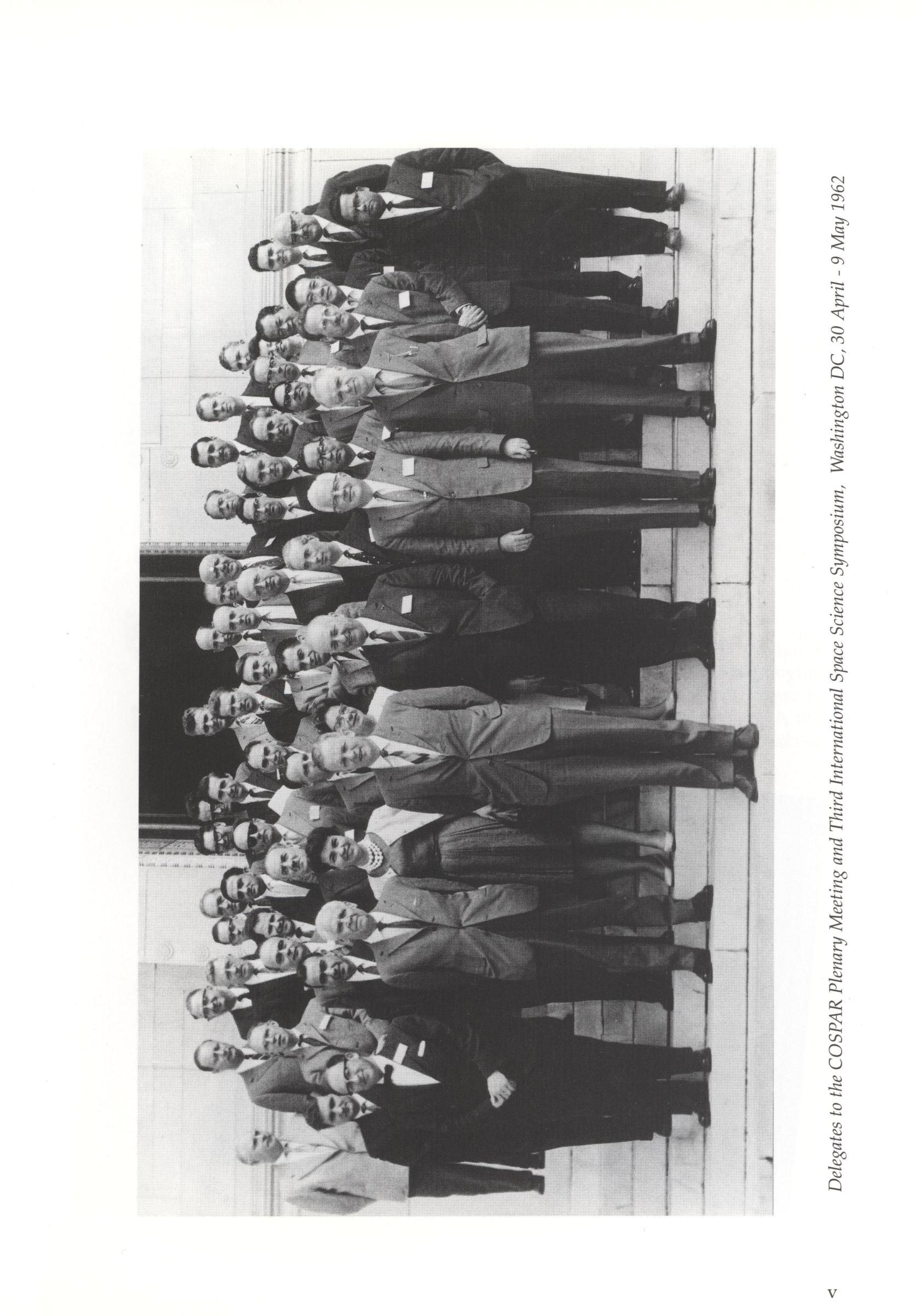
Hot on the heels of its 46th Scientific Assembly, held in Florence, Italy at the beginning of August, we are celebrating over 60 years of collaboration between ESA (and its predecessors) and COSPAR, the Committee on Space Research. The opening of two documents, an ESA brochure produced for 40 years of COSPAR and a special publication consisting of an ESA report produced for the 36th COSPAR meeting, will reveal links between the two organisations through the activities of the ESA Science Programme and in some of the key figures from the first decades of European space.
ESA BR-135, 40 Years of COSPAR, was published for the 40th anniversary of COSPAR in 1998 and ESA SP-1296, ESA’s Report to the 36th COSPAR Meeting, some 8 years later in 2006. Professor Roger Bonnet personifies the organisational inter-relationships having held executive positions in both – as the second Director of the ESA Science Programme (1983 to 2001) and then immediately afterwards as President of COSPAR, from 2002-2010 - with each of these publications produced during one of these terms.
COSPAR was established on 3 October 1958 by the International Council for Scientific Unions. Its Charter outlines its purpose, “to promote at an international level scientific research in space, with emphasis on the exchange of results, information and opinions, and to provide a forum, open to all scientists, for the discussion of problems that may affect scientific space research. The objectives of COSPAR are to be achieved through the organization of scientific assemblies, publications, or any other means.” The ESA brochure, looking back at its first 40 year, fleshes out this role through reminiscences from those involved, and gives insights into its organisation and many achievements.
The brochure is divided into a first main section of personal recollections, followed by a smaller portion of statistical data, listing assemblies, colloquia, presidents, awards and publications. Rather than a strict historical narrative, the written contributions nonetheless act as pieces in a jigsaw puzzle, filling in chapters of the story and demonstrating the importance of COSPAR in its early years as a depoliticised meeting place for scientific cooperation between East and West. In the words of Juan Roederer of the University of Alaska: “Science, and space science in particular, was one of the few open bridges between East and West during the difficult years of the Cold War”.
The related diplomatic challenges of developing and delivering this international cooperation are vividly outlined in often humorous anecdotes and memories. Others detail the scientific work carried out and the outcomes obtained; the result of, or sometimes in spite of, these complicated collaborative mechanisms and cultural differences!
The text by Laurence Peterson (UCLA), for example, talks about the origins, at the 1980 COSPAR assembly in Budapest, of the cooperative activities planned for the apparition of Comet Halley in 1986. Out of this, and subsequent meetings of an ad-hoc COSPAR committee, came the framework for scientific collaboration after which ESA took the lead in forming the Inter-Agency Consultative Group. And, in Peterson’s own words, “the rest is history...”
Among the other authors are some familiar names from European space, including:
- Henk van de Hulst, the first President of COSPAR, delegate to various ESRO and ESA committees and Chairman of the ESRO Council from 1968-1970, who recalls the first moves towards the creation of ESA’s predecessor ESRO at the first COSPAR assembly in 1960.
- Jacques Blamont of French Space Agency CNES, who served on various ESRO committees, also looks back to discussions with Pierre Auger and other delegates, on the formation of a European programme for space at the 1960 meeting in Nice.
- Reimar Lüst, whose long career in European space culminated as ESA Director General from 1984-1990, reviews his ‘three paths into space activities’ (through the Max-Planck- Institut, COPERS/ESRO and the French sounding rocket programme).
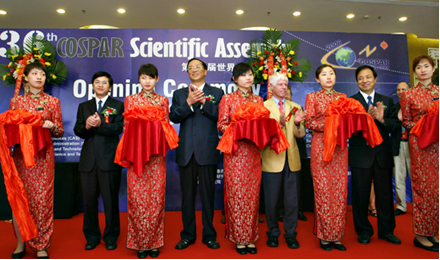
Conversely, ESA SP-1296 is one in a set of regular ESA reports to COSPAR, detailing ESA’s scientific missions for the annual (and since 1980, biennial) assemblies. This edition was produced for the 36th COSPAR meeting, held in Beijing in July 2006, during Bonnet’s mandate as COSPAR President.
Over 2000 people from 70 countries participated in the week-long Assembly, which included 80 scientific events, covering all branches of space research, with interdisciplinary lectures, a Space Agency Round Table and two special lunch presentations. Elections for office-bearers took place during the first session of the COSPAR council meeting, at which Bonnet was re-elected as President. It was also announced that COSPAR had sponsored an initiative, endorsed by ESA and NASA, to have the landing site of the Huygens probe on Titan named after Hubert Curien, former President of CNES, Chairman of the ESA Council and French Minister of Research and Space, in honour of his contribution to science and space research.
The ESA report itself consists of an introduction and five main sections, covering missions in operation, missions in the post-operation/archival phase, projects under development, missions under definition and missions under study.
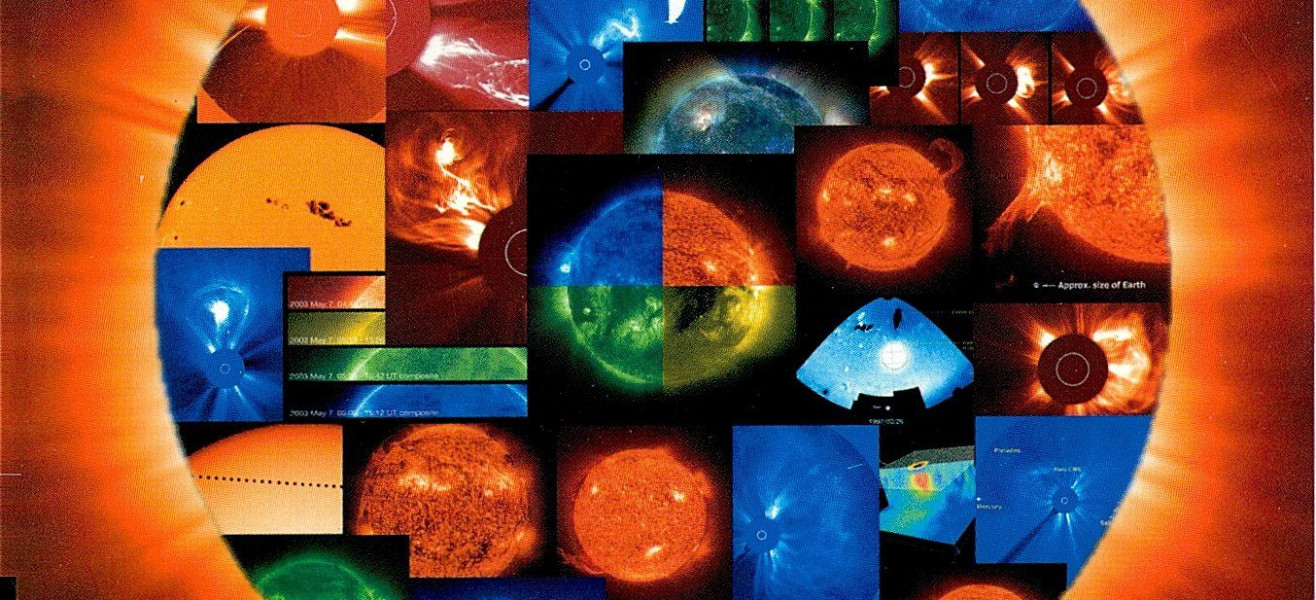
The introduction sets the scene, with a complete list of the ESRO and later ESA scientific missions in the areas of astronomy, Solar System science and fundamental physics, from the launches of the first ESRO satellites in 1968 to Venus Express in 2005. It then goes on to highlight ‘news’ since the last report (on missions in operation at the time including Cassini/Huygens, Mars Express and SMART-1) and recap the scientific results from older missions in orbit such as XMM Newton, Integral, the Hubble Space Telescope, SOHO, Cluster and Ulysses.
The detailed chapters that follow in this 2006 Report offer another instalment in our survey of the ESA Science Programme, some 25 years after the ‘Green Book’ for the 1980s that we looked at in July and shine a light on the legacy of the Directorship of Bonnet, one of its prime architects.
In Juan Roederer’s fond words, “COSPAR was always a focal point for truly international science, a science without political and ideological boundaries”. The activities of the ESA Science Programme made, and continue to make, a vital European contribution to this agenda, and to the peaceful uses of space for the global community.
Read more
- ESA BR-135, 40 Years of COSPAR
- ESA SP-1296, ESA's Report to the 36th COSPAR Meeting
- Huygens landing site to be named after Hubert Curien
- COSPAR website
Further ESA reports to COSPAR are available upon request from the ESA Archives – write to Archive.Services@esa.int